
Corporate & Commercial

Contracts, structures and governance for businesses that need the paperwork to hold when something goes wrong.

Mergers & Acquisitions

Buying or selling a business, from the term sheet and due diligence through to completion and the restraints that follow.

Litigation & Dispute Resolution

Commercial disputes in the NSW, ACT and Federal courts, resolved early where that is possible and run properly where it is not.


Government and Defence

Supplying government and the defence industry.

Technology and Software

Your product scales digitally. Your contracts have to scale with it.

Financial Services

A regulated business, on solid legal footing.

Associate

Sydney or Canberra, five years post-admission and up.

Special Counsel

Sydney or Canberra, typically eight years and up.

Associate Partner

Sydney or Canberra, a practice you are building.

Wahlstation for German Referendare

Sydney or Canberra, open all year.

Articles

Where the law changed, what it now requires, and what a business has to do about it.

Guides

One question worked through end to end, with the provisions and the decisions it rests on.

Case notes

What a judgment decided, and what follows from it for anyone in the same position.

Germany

A German desk for businesses moving between Australia and the German-speaking market.
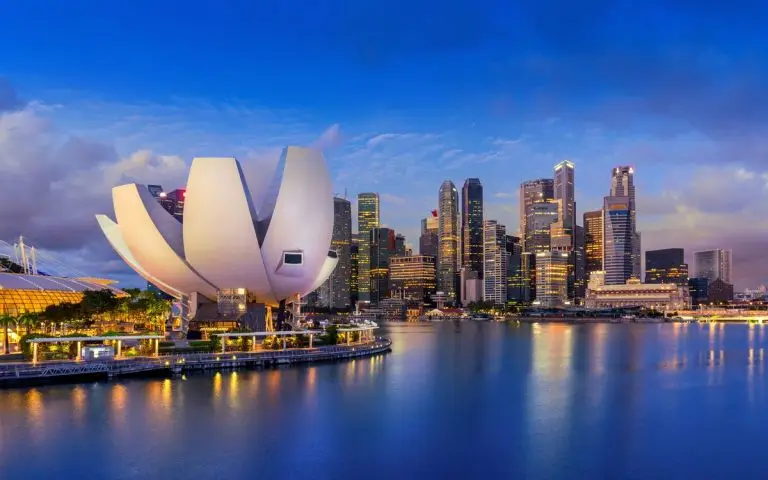
Singapore

Singapore law where it governs the contract, and the arbitral seat that carries much of the region’s work.

Vietnam

Market entry, supply arrangements and dispute resolution for Vietnam.

Arbitration

An arbitration clause makes four decisions. Most people read it as one.

The written companion to the webinar of 21 October 2026 on the Arbitration Court at the German Chamber of Commerce and Industry (SGH), hosted by the German-Australian Chamber of Industry and Commerce with the German Chamber of Commerce and Industry (DIHK). Dr Christian Gross of the DIHK presents the institution. This page sets out our part: what the clause decides, what the SGH and SIAC Rules do when it says nothing, and where the SGH fits for a German company dealing with Australia and the region.
The Arbitration Court at the German Chamber of Commerce and Industry (SGH) Explained
Wednesday 21 October 2026, 6.00 pm AEDT (9.00 am CEST). Free, online, in English.
Why arbitrate

An award travels. A judgment mostly does not

01

A German judgment can be registered here

Germany is listed in the Foreign Judgments Regulations 1992 (Cth), so a money judgment of a German superior court can be registered in Australia and enforced.
02

That arrangement is country by country

Registration works here because Australia has listed Germany. What a German judgment is worth anywhere else depends on the law of the country where the assets are, and a counterparty with assets in several countries raises that question in each of them.
03

An award is enforced on a short list of grounds

A foreign arbitral award is binding on the parties and can be enforced in an Australian court as if it were a judgment of that court. Enforcement may be refused only on the grounds the Act lists.
A loaded container ship under way, photographed from directly above on open water
One clause, four decisions

What an arbitration clause actually decides

One arbitration clause, four decisionsAn arbitration clause carries four separate decisions. The seat decides which country's arbitration law governs the procedure, which courts support the arbitration and which courts alone can set the award aside. The rules are the institution's procedure, chosen separately from the seat. The law of the contract decides who is right. The law of the clause decides whether the clause itself is valid and what it covers. Each is set out under the drawing. One clause, four decisions The arbitrationclause 1 The seat Which arbitration law governs, which courtssupport it, and which alone can set the award aside 2 The rules The institution's procedure, chosen separatelyfrom the seat: SGH Rules or SIAC Rules 3 The law of the contract The law that decides who is right in the dispute 4 The law of the clause The clause is a separate agreement. Its law decideswhether it is valid and what it covers One arbitration clause, four decisionsAn arbitration clause carries four separate decisions. The seat decides which country's arbitration law governs the procedure, which courts support the arbitration and which courts alone can set the award aside. The rules are the institution's procedure, chosen separately from the seat. The law of the contract decides who is right. The law of the clause decides whether the clause itself is valid and what it covers. Each is set out under the drawing. One clause, four decisions The arbitration clause 1 The seat Which arbitration law governs, whichcourts support it and can set it aside 2 The rules The institution's procedure, chosenseparately: SGH Rules or SIAC Rules 3 The law of the contract The law that decides who is right inthe dispute itself 4 The law of the clause A separate agreement. Its law decidesif it is valid and what it covers
01

The seat

The legal home of the arbitration, not the place anyone meets. It decides which country’s arbitration law governs the procedure, which courts support the arbitration, and which courts alone can set the award aside. The hearing can be held somewhere else, and under the SGH Rules proceedings are generally conducted online (Arts 2(3), 16(2)).
02

The rules

The institution and its procedure, chosen separately from the seat. Both sets of rules let the parties choose the seat (SGH Rules Art 16(1); SIAC Rules r 36.1). The institution has to be named as it names itself, which is why its own model clause is the place to start.
03

The law of the contract

The law that decides who is right. Arbitration does not supply it: the contract does, or the tribunal does when the contract is silent, and the tribunal’s answer cannot be predicted at signature.
04

The law of the clause

The arbitration clause is a separate agreement that survives the contract around it, so a party arguing that the contract is void is not, by that argument, outside the arbitration (SGH Rules Art 27(1); SIAC Rules r 31.1). Because it is separate it can have its own governing law, which decides whether the clause is valid and what it covers. Almost no clause says what that law is.
When the clause is silent

What the SGH and SIAC Rules decide when the clause says nothing

01

The seat

SGH Rules: the tribunal decides, and the place will then generally be in Germany (Art 16(1)). SIAC Rules: the tribunal decides (r 36.1).
02

The law of the contract

SGH Rules: the law with the closest connection to the subject matter (Art 28(2)). SIAC Rules: the law the tribunal determines to be appropriate (r 35.1).
03

The law of the clause

SGH Rules: the law applicable in the State in which the award is made (Art 27(2)). SIAC Rules: no rule, but SIAC’s own model clause carries a line for the parties to fill in.
04

The language

SGH Rules: German or English, and the SGH decides if the parties have not (Art 16(3)). SIAC Rules: any language, decided by the tribunal if not agreed (r 37.1).
05

The number of arbitrators

SGH Rules: one arbitrator up to EUR 250,000 in dispute and three above it, unless the parties agree otherwise (Art 2(1)). SIAC Rules: one, unless the Registrar decides the dispute warrants three (r 19.1).
A worked example

One contract, worked through the four decisions

One contract, worked through the four decisionsA German supplier and an Australian distributor sign a contract governed by German law. Its arbitration clause names the SGH Rules and a seat in Singapore, in English. The tribunal decides the dispute under the SGH Rules and German law, by video. The Singapore courts supervise the arbitration and alone can set the award aside. The Australian courts enforce the award against the distributor's assets. Each step is set out under the drawing. One contract, worked through the four decisions German supplier Australian distributor distribution contract, governed by German law Arbitration clause:SGH Rules, seat Singapore, English Tribunal, underthe SGH Rules decides the dispute under Germanlaw, by video, in English Singapore courts(the seat) supervise the arbitration andalone can set the award aside Australian courts(the assets) enforce the award against thedistributor's assets One contract, worked through the four decisionsA German supplier and an Australian distributor sign a contract governed by German law. Its arbitration clause names the SGH Rules and a seat in Singapore, in English. The tribunal decides the dispute under the SGH Rules and German law, by video. The Singapore courts supervise the arbitration and alone can set the award aside. The Australian courts enforce the award against the distributor's assets. Each step is set out under the drawing. One contract, worked throughthe four decisions Germansupplier Australiandistributor distribution contract, German law Arbitration clause:SGH Rules, seat Singapore Tribunal, under the SGH Rules decides the dispute under Germanlaw, by video, in English Singapore courts (the seat) supervise the arbitration andalone can set the award aside Australian courts (the assets) enforce the award against thedistributor's assets
01

The contract

A German supplier and an Australian distributor sign a distribution agreement governed by German law. Its arbitration clause names the SGH Rules, a seat in Singapore and English, and the hearing is held by video.
02

Who does what

The tribunal decides the dispute under the SGH Rules and German law. The Singapore courts supervise the arbitration and are the only courts that can set the award aside. The Australian courts enforce the award against the distributor’s assets.
03

The law of the clause, here

The clause does not name it, so under the SGH Rules it is the law applicable in Singapore, where the award is made (Art 27(2)), while the contract is under German law. One sentence in the clause would have settled it.
04

What the example is for

It shows the four decisions coming apart: each is made separately and each has its own consequence. It illustrates how the pieces fit together. It is not a recommended combination.
Australia and the region

Australia as a seat, and what is actually used

01

The Model Law is the law here

The UNCITRAL Model Law has the force of law in Australia under s 16(1) of the International Arbitration Act 1974 (Cth), and the courts support arbitration. ACICA is the Australian institution.
02

A court shall stay proceedings

Where a party sues in breach of an arbitration agreement, the court shall, on the application of a party, stay the proceedings and refer the parties to arbitration (s 7(2)). It is not a discretion.
03

Singapore is a Model Law seat as well

Singapore, the seat an Asian counterparty most often proposes, works on the same UNCITRAL Model Law, so the framework is familiar from either end.
04

What is used in practice

In our experience, where the Australian or Asian counterparty is the stronger party, or the two are of equal weight, the clause usually ends up at SIAC in Singapore, and sometimes at another institution or with the courts. That is not a verdict on any seat. It is what counterparties and their lawyers know and will sign.
The SGH next to SIAC

What is the same, what differs, and who each difference favours

Much is the same. Under both sets of rules the clause survives the contract (SGH Rules Art 27(1); SIAC Rules r 31.1), the parties choose the seat and the law, the proceedings are confidential (Art 15; r 59.1), the tribunal can order interim measures while the courts remain available (Art 36; r 45), and a decision on fairness alone needs the parties’ authority (Art 28(4); r 35.3). Six differences matter more, and each is a design choice rather than a defect.
01
Under the SGH Rules, German or English, and the choice also decides which language version of the Rules applies (Art 16(3)). Under the SIAC Rules, any language the parties agree, or that the tribunal decides (r 37.1). Between a German and an Australian party the difference rarely matters.
02
An SGH tribunal can order documents to be submitted, but the Rules require it to reject requests for discovery (Art 18(2), (4)). A SIAC tribunal can order a party to produce documents it considers relevant to the case and material to its outcome (r 50.2(f)). For a counterparty from a common law system this is usually the first difference it notices.
03
The SGH Rules fix it by value: one arbitrator up to EUR 250,000 in dispute and three above it (Art 2(1)). The SIAC Rules appoint one unless the Registrar decides the dispute warrants three (r 19.1). Above EUR 250,000 the SGH default therefore puts three arbitrators on the case.
04
An SGH tribunal should give the parties preliminary legal guidance before the oral hearing, and strives towards an amicable settlement, for which it may give a preliminary view (Arts 19(4), 22(1)). The SIAC Rules contain no equivalent duty.
05
The SGH Rules require the proceedings to be concluded within 12 months of the tribunal’s appointment, or six months on the fast track where the parties agree to it (Arts 2(2), 20(1)), and the fees follow fixed scales. The SIAC Rules have a streamlined and an expedited procedure (rr 13, 14), and SIAC’s fees are subject to maximum limits set by its schedule (r 57.4).
06
SIAC offers an emergency arbitrator before the tribunal is constituted (r 12.1) and scrutinises every draft award before it is issued (r 53). The SGH Rules provide no emergency arbitrator, leave the parties free to seek interim measures from a court (Art 36(3)), and provide review of the draft award where a party or the SGH asks for it (Art 25(2)).
01 / 06
What language can the arbitration run in?
Under the SGH Rules, German or English, and the choice also decides which language version of the Rules applies (Art 16(3)). Under the SIAC Rules, any language the parties agree, or that the tribunal decides (r 37.1). Between a German and an Australian party the difference rarely matters.
Who it favours: nobody in a German and Australian contract. It matters only where a third language is in play.
02 / 06
Can a party be made to hand over documents?
An SGH tribunal can order documents to be submitted, but the Rules require it to reject requests for discovery (Art 18(2), (4)). A SIAC tribunal can order a party to produce documents it considers relevant to the case and material to its outcome (r 50.2(f)). For a counterparty from a common law system this is usually the first difference it notices.
Who it favours: the SGH approach suits the party that already holds the documents. A party that needs the other side’s documents to prove its case is better served by the SIAC approach.
03 / 06
How many arbitrators, if the clause does not say?
The SGH Rules fix it by value: one arbitrator up to EUR 250,000 in dispute and three above it (Art 2(1)). The SIAC Rules appoint one unless the Registrar decides the dispute warrants three (r 19.1). Above EUR 250,000 the SGH default therefore puts three arbitrators on the case.
Who it favours: neither side as such. Three arbitrators cost more, most noticeably at the lower end of the range, and writing the number into the clause removes the question.
04 / 06
How active is the tribunal?
An SGH tribunal should give the parties preliminary legal guidance before the oral hearing, and strives towards an amicable settlement, for which it may give a preliminary view (Arts 19(4), 22(1)). The SIAC Rules contain no equivalent duty.
Who it favours: it can save cost and time for both sides. A party that expects the tribunal to stay silent until the award may read an early view as an early commitment.
05 / 06
How long does it take, and what does it cost?
The SGH Rules require the proceedings to be concluded within 12 months of the tribunal’s appointment, or six months on the fast track where the parties agree to it (Arts 2(2), 20(1)), and the fees follow fixed scales. The SIAC Rules have a streamlined and an expedited procedure (rr 13, 14), and SIAC’s fees are subject to maximum limits set by its schedule (r 57.4).
From the SGH’s own scales, net of VAT and before the parties’ own costs: at EUR 250,000 in dispute, a processing fee of EUR 3,500 and a sole arbitrator’s fee of EUR 8,800; at EUR 1 million, EUR 11,000 and EUR 62,000 for the default three-member tribunal, or EUR 24,800 for a sole arbitrator; at EUR 5 million, EUR 31,000 and EUR 118,000 (Appendices 1 and 2). The scales allow an increase for unusual effort.
Who it favours: a fixed timetable and price suit the party that wants a decision quickly, usually the claimant. Extensions of deadlines are capped at 21 days, with 7 more only in exceptional cases (Art 17(3)), which is strict for a party with a document-heavy case.
06 / 06
What happens before the tribunal exists, and after it decides?
SIAC offers an emergency arbitrator before the tribunal is constituted (r 12.1) and scrutinises every draft award before it is issued (r 53). The SGH Rules provide no emergency arbitrator, leave the parties free to seek interim measures from a court (Art 36(3)), and provide review of the draft award where a party or the SGH asks for it (Art 25(2)).
Who it favours: where assets may move before a tribunal is in place, the SIAC route is the more direct one. Under the SGH Rules the urgent route is a state court.
Related expertise
The Frankfurt skyline behind the Roemer, seen across the old town
Where the SGH fits

Neither set of rules is better in the abstract

01

Where the SGH fits

Where the German party has the negotiating weight, being a supplier, licensor, principal or parent dealing with its own distributor or subsidiary; where the contract is under German law; and where the likely disputes are mid-sized, so that a fixed price and a 12-month timetable matter more than familiarity.
02

Where SIAC fits

Where the counterparty is of equal or greater weight; where several parties or contracts are involved, which the SIAC Rules provide for (rr 15 to 18); where assets may move before a tribunal is formed; or where the case turns on the other side’s documents.
03

When to decide

At signature, when nobody is thinking about disputes and the clause is cheapest to negotiate. Whichever institution is chosen, start from its model clause unchanged and fill in each supplement rather than leaving the decision to the defaults.
How to write it in

The SGH model arbitration clause, with its supplements

The SGH publishes a model clause and a set of optional supplements, and recommends against changing the clause otherwise. The clause reads:
The SGH model arbitration clause, as of October 2024
“All disputes arising out of or in connection with the present contract or in regard to its validity shall be finally settled under the Rules of Arbitration of the Arbitration Court at the German Chamber of Commerce and Industry while excluding ordinary legal proceedings.”
The SGH’s optional supplements that settle the decisions on this page
“The place of arbitration is … [please specify desired location].”
“The number of arbitrators is … [please state 1 or 3].”
“The language of the arbitration proceedings shall be … [please select German or English as language of proceedings].”
“The substantive law applicable in the matter is the law of the country … [please specify desired legal system].”
“The rules of the “fast-track arbitration proceeding” pursuant to Article 20 of the Rules of the Arbitration of Arbitration Court at the German Chamber of Commerce and Industry shall apply.”
Our addition, which is not part of the SGH’s published text
“The law governing this arbitration clause shall be the law of … [please specify].”
None of the supplements names the law of the clause itself, so without a sentence of that kind the SGH Rules supply the answer (Art 27(2)). Ours is worded on the line SIAC’s model clause carries for the same purpose.
Checklist

Four questions for every contract already signed

01

Is the seat named?

A city and a country, as the legal place of the arbitration rather than the place of a hearing. If it is not, the rules decide: generally Germany under the SGH Rules, and the tribunal under the SIAC Rules.
02

Are the rules named exactly?

The institution’s name as the institution uses it, ideally in its own model clause wording. Check the number of arbitrators and the language while you are there.
03

Is the law of the contract chosen?

A governing law clause, so that the tribunal does not have to find the law with the closest connection or the law it considers appropriate.
04

Is the law of the clause chosen?

Usually it is not. One sentence fixes it. Where any of the four is missing the defaults decide, and the next variation, renewal or extension is the time to fix it.
The boundary

What we advise on, and what we leave to others

We are admitted in Australia and advise on Australian law, from offices in Sydney, Canberra and Frankfurt am Main. On the subject of this page that covers the arbitration clause itself, the enforcement of awards in Australia, and acting in an arbitration.
A question of German law is answered by German lawyers. The SGH’s procedure and administration are for the SGH, and Dr Christian Gross’s presentation on 21 October covers the institution itself.
Questions people ask

The short ones

Does an SGH hearing have to take place in Germany?

No. The seat and the place of a hearing are different things. Under the SGH Rules a hearing can be held elsewhere where the tribunal considers it appropriate, and proceedings are generally conducted online (Arts 16(2), 2(3)).

Can an SGH arbitration be run in English?

Yes. The parties can choose German or English, and the choice also decides which language version of the Rules applies (Art 16(3)).

Can the Australian party ignore the clause and sue?

It can start proceedings, but on the application of a party the Australian court shall stay them and refer the parties to arbitration (International Arbitration Act 1974 (Cth) s 7(2)).

Can an award be published?

The SGH may publish an anonymised award for scientific purposes unless a party objects before it is issued (Art 39(1)). SIAC may publish only with the written agreement of all parties (r 60.1).

Can you advise us in German?

Yes, in writing and in conference. The advice is on Australian law, and the contracts themselves are usually in English.

Is anything on this page advice?

No. It is general information for a business audience and not advice on any particular contract. The rules are stated as at October 2026: the SGH Rules as of November 2024 and the SIAC Rules 2025.

Send us the clause

The quickest useful thing is the dispute clause as it stands, with a line on who the counterparty is and where its assets are. We will tell you which of the four decisions it makes, which it leaves to the defaults, and what we would change.

Sydney

Canberra

Frankfurt a.M.