






Corporate & Commercial

Contracts, structures and governance for businesses that need the paperwork to hold when something goes wrong.

Mergers & Acquisitions

Buying or selling a business, from the term sheet and due diligence through to completion and the restraints that follow.

Litigation & Dispute Resolution

Commercial disputes in the NSW, ACT and Federal courts, resolved early where that is possible and run properly where it is not.

Government and Defence

Supplying government and the defence industry.

Technology and Software

Your product scales digitally. Your contracts have to scale with it.

Financial Services

A regulated business, on solid legal footing.

Legal Administration Assistant, Canberra

Canberra office, full time, on site.

Wahlstation for German Referendare

Sydney or Canberra, open all year.

The track record

Judgments and tribunal outcomes, transactions completed, appointments taken, and the conversations we are part of in Australia and in Germany.

Germany

A German desk for businesses moving between Australia and the German-speaking market.

Singapore

Singapore law where it governs the contract, and the arbitral seat that carries much of the region’s work.

Vietnam

Market entry, supply arrangements and dispute resolution for Vietnam.

Commercial towers seen from below, glass facades converging against the sky
International

We act on the commercial work that crosses a border, and we say which side of it we answer.

Cross-border lawyers for commercial work, admitted in Australia, with offices in Sydney, Canberra and Frankfurt am Main. We advise businesses coming into Australia and Australian businesses going out, in German and in English.
Sydney · Canberra · Frankfurt a.M.
Offices
German and English
Working languages
Australian law
What we advise on ourselves
2007
Practising in Australia since
Where to start

The corridors we run, and the questions that cross all of them

Four pages sit under this one, each written for the business at the other end of the corridor. The three boxes at the foot answer the questions that arrive whichever direction the work runs in.
05
Whichever one you can afford to enforce. The governing law decides what the words mean and the forum decides who reads them, how long that takes and what the result is worth once you have it. The choice is commercial before it is legal, and it is cheap to make early and expensive to argue about later.
06
Sometimes by registration and sometimes only by suing again, and which one it is depends on the court that gave the judgment rather than on the amount. Australia registers the judgments of the courts listed under the Foreign Judgments Regulations 1992, and that list is narrower than most parties assume. An arbitral award is a different road, and usually the shorter one.
07
At the numbers. We say so at the outset rather than when the structure is already registered, and we work with an accountant who can answer them.
05 / 07
Which law should the contract choose?
Whichever one you can afford to enforce. The governing law decides what the words mean and the forum decides who reads them, how long that takes and what the result is worth once you have it. The choice is commercial before it is legal, and it is cheap to make early and expensive to argue about later.
A governing law clause and a forum clause do different jobs and are often written as though they did one. The governing law decides what the words mean. The forum decides who reads them, how long that takes, and what the award or the judgment is worth once you have it.
The question to settle first is where the counterparty’s assets are. A judgment is only useful where it can be enforced, so a clause naming a court that cannot reach those assets buys a result and not a remedy. Where the assets are in a country that will not register a foreign judgment, arbitration is usually the shorter road, because the New York Convention reaches further than any judgments treaty.
Neither clause should be the last thing agreed. They are cheap to negotiate while the deal is friendly and expensive to argue about afterwards, which is the whole of the case for settling them early.
06 / 07
Can a foreign judgment be enforced here?
Sometimes by registration and sometimes only by suing again, and which one it is depends on the court that gave the judgment rather than on the amount. Australia registers the judgments of the courts listed under the Foreign Judgments Regulations 1992, and that list is narrower than most parties assume. An arbitral award is a different road, and usually the shorter one.
Australia registers the judgments of courts listed under the Foreign Judgments Regulations 1992, and the list is narrower than most parties assume. A final money judgment of a listed court can be registered and then enforced as though the Australian court had given it, and the application has to be made within six years.
Where the court is not listed, the judgment is enforced at common law instead, which means starting a fresh proceeding on the judgment debt. That is slower and costs more, and it is the position for a good deal of German commercial litigation, because the Regulations reach the higher German courts and not every court a claim might start in.
An arbitral award made abroad is a different road again and usually the better one. Under the International Arbitration Act 1974 an award is enforced as though it were a judgment of the court, and the grounds for refusing are narrow.
07 / 07
Where does a lawyer stop and an accountant start?
At the numbers. We say so at the outset rather than when the structure is already registered, and we work with an accountant who can answer them.
Most cross-border structuring questions have a tax answer underneath the legal one, and the tax answer usually has to come first. Whether a subsidiary or a branch is right, whether a transfer of intellectual property triggers a capital gain, whether a shareholder loan is caught by Division 7A, and what duty is payable in which state, are questions for a tax accountant. Drafting before they are answered means drafting twice.
The firm is a member of the German Professional Services Alliance and works with Accru Felsers on accounting and tax. Where a restructure, a share transfer or a raise is in contemplation, we will say which questions we need the accountant’s answer to before we draft, and we can make the introduction.
Which way the work runs

The situations this work starts from

Cross-border work arrives as one of a small number of situations. These are the ones we are most often called on for, in both directions.
Coming in

Establishing an Australian entity

Incorporating the company, the constitution and the shareholders’ agreement, the resident director requirement, and the registrations that have to be in place before the first invoice.
Coming in

Selling into Australia without an entity

Supply terms that survive an insolvency, retention of title registered on the PPSR, and the consumer guarantees that reach a business purchase whatever the contract says.
Coming in

Appointing a distributor or an agent

The territory, the targets and the termination terms, and the trade mark filed in Australia before the appointment rather than after it.
Going out

Establishing in the German-speaking market

Run with the Frankfurt office and German counsel, so the German law questions are answered in Germany and the Australian side is answered here.
Both ways

Cross-border supply and services contracts

Drafting and negotiating the agreement, and settling the governing law and the forum early, while they are still cheap to agree.
Both ways

Buying or selling a business across a border

Due diligence, the sale agreement, the conditions, and the tax questions handed to an accountant before the structure is fixed rather than after.
Disputes

Arbitration seated in Singapore

Advising on the clause before there is a dispute, and acting in the reference when there is one, with Singapore counsel where Singapore law governs.
Disputes

Enforcing a foreign judgment or award here

Registration where the court is listed, a fresh proceeding at common law where it is not, and enforcement of an arbitral award under the International Arbitration Act 1974.
How the work runs

How an engagement begins, and what the first month looks like

01

Tell us the commercial plan, not the legal question

What you are trying to do, by when, and with whom. The legal question is usually a consequence of the plan and we would rather derive it than be handed it.
02

We say what is involved, what it costs, and who else is needed

In writing, before any work starts. That includes naming the points where a tax accountant or counsel in the other jurisdiction has to answer first, so the sequence is clear rather than discovered.
03

A costs agreement, and a single point of contact

The person who scopes the matter is the person who runs it. You will not be handed down a chain after the engagement is signed.
04

The first month is the structure, not the paperwork

Getting the entity, the contract and the forum right at the start is what makes the following year cheap. Work done in the wrong order is the most expensive thing in cross-border practice.
The boundary

Where a cross-border lawyer stops, and who answers the rest

We are admitted in Australia and we advise on Australian law. That is the part we answer ourselves, and it is the part most cross-border questions turn on when the business is coming here.
Foreign law is answered by lawyers admitted there. German law is answered from the Frankfurt office by German lawyers. Singapore law is advised on through registered Singapore counsel. Vietnamese law goes to counsel in Vietnam. We say which side of the line a question falls on when it arrives, rather than reasoning toward a foreign answer from Australia.
Tax is the other boundary and it is the one that catches people. The firm is a member of the German Professional Services Alliance and works with Accru Felsers on accounting and tax; where the numbers have to come before the drafting, we will say so and we can make the introduction.
Who you would work with

The people who would run it

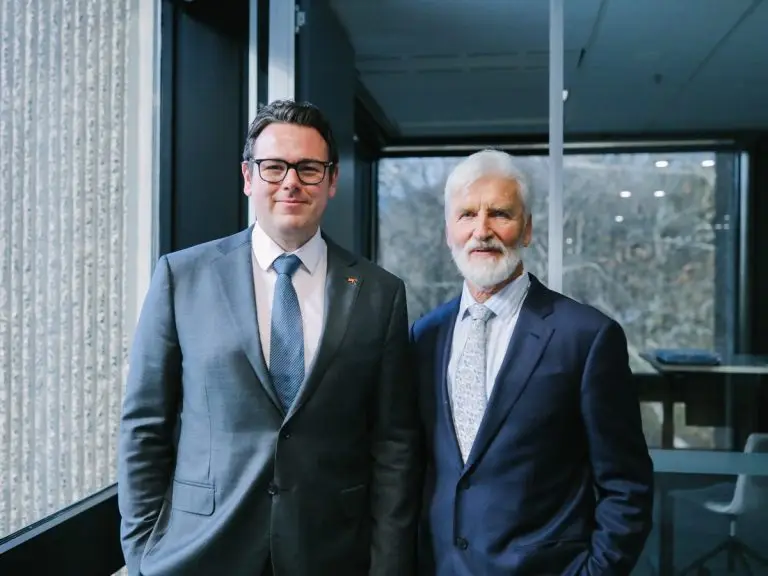
Fabian Hoffmann, Principal at Boettcher Law

Fabian Hoffmann

Principal
Corporate, commercial and cross-border work, and the German-speaking client base. Admitted in the Australian Capital Territory as a barrister and solicitor, and appears without counsel. Works in German and English.

Dominik Schumann

Frankfurt am Main
The German end of the corridor. A question of German law is answered from Germany, by German lawyers, and not reasoned toward from Australia.
Questions people ask

The short ones

Can you advise us in German?

Yes, in writing and in conference. Correspondence on a German-speaking matter is normally in German, and the documents are drafted in the language the parties will sign in.

Do we need an Australian entity to sell here?

Not always. A supply arrangement or a distributor can work without one, and it changes which obligations attach to you. It is worth deciding deliberately rather than by default, because unwinding the wrong choice costs more than making it.

Who is the resident director requirement about?

An Australian proprietary company needs at least one director ordinarily resident in Australia, and a Singapore company has its own version of the same requirement. The office carries a director’s duties and a director’s exposure, so it is not an administrative appointment.

Can you act if the other side is in a third country?

Yes. Most of this work involves a jurisdiction neither party is in, which is usually the seat of the arbitration or the law the contract chose. We act on the Australian side and brief counsel where the governing law is not Australian.

How quickly can you start?

A scope and a fee estimate normally the same week. Where a deadline is already running, say so in the first email: a statutory period or a contractual notice period changes the order the work has to be done in.

Do you work with our existing lawyers?

Regularly. A good deal of this work comes from firms abroad who need the Australian side answered, and from in-house teams who want the drafting to match the structures they already use.

Tell us what you are trying to do

A short description of the commercial plan is enough to begin. We will set out what is involved, what it costs, and whether your accountant or counsel abroad should go first. In German or in English.
Please note
The four pages under this one state the position in more detail, and none of it is advice on a particular transaction.
A situation not listed here is usually a variation on one of them.

Sydney

Canberra

Frankfurt a.M.