
Corporate & Commercial

Contracts, structures and governance for businesses that need the paperwork to hold when something goes wrong.

Mergers & Acquisitions

Buying or selling a business, from the term sheet and due diligence through to completion and the restraints that follow.

Litigation & Dispute Resolution

Commercial disputes in the NSW, ACT and Federal courts, resolved early where that is possible and run properly where it is not.


Government and Defence

Supplying government and the defence industry.

Technology and Software

Your product scales digitally. Your contracts have to scale with it.

Financial Services

A regulated business, on solid legal footing.

Legal Administration Assistant, Canberra

Canberra office, full time, on site.

Wahlstation for German Referendare

Sydney or Canberra, open all year.

The track record

Judgments and tribunal outcomes, transactions completed, appointments taken, and the conversations we are part of in Australia and in Germany.

Germany

A German desk for businesses moving between Australia and the German-speaking market.

Singapore

Singapore law where it governs the contract, and the arbitral seat that carries much of the region’s work.

Vietnam

Market entry, supply arrangements and dispute resolution for Vietnam.

Retail, Trade and Consumer Goods

From the shelf to the checkout, sell with certainty in two markets.
We advise manufacturers, wholesalers, distributors and retailers on the terms that move goods from a factory to a shelf or a doorstep in either market: distribution, supply and agency agreements, exclusivity and minimum volume commitments, online and marketplace platform arrangements, and the consumer guarantee and unfair contract terms regime under the Australian Consumer Law.
2007
Practising in Australia since
3
Offices: Sydney, Canberra, Frankfurt
2
Legal systems, one team
1
Principal on every matter
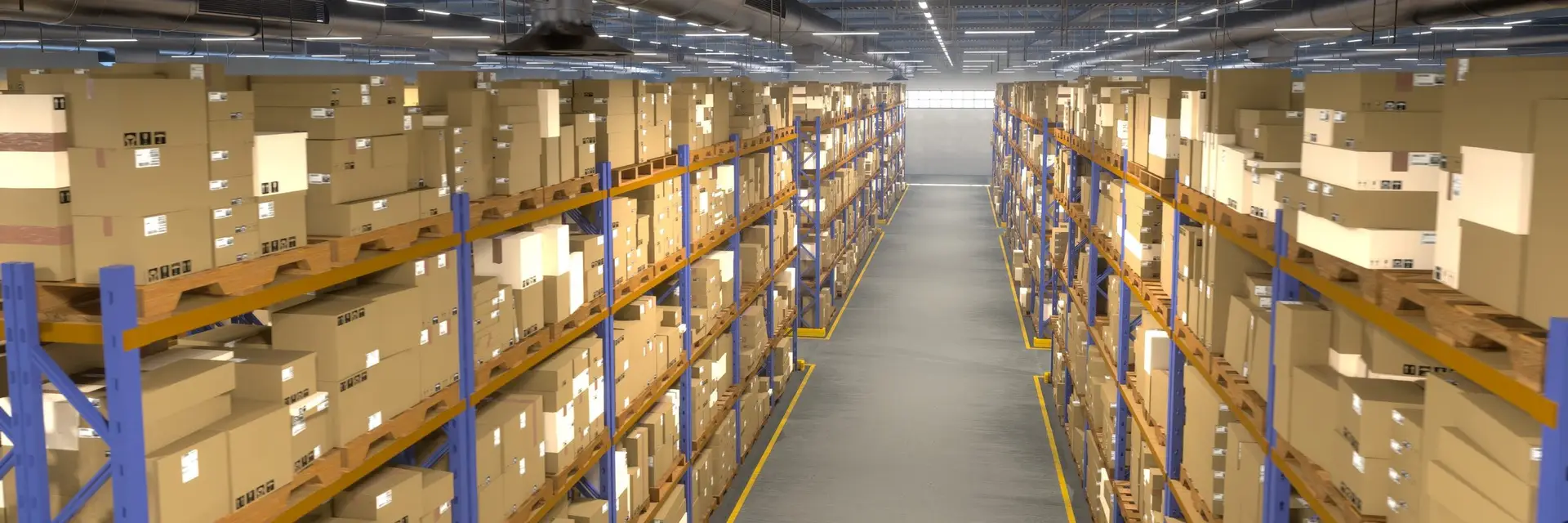
A distribution centre aisle, pallet racking stacked with cartons on both sides
How the work runs in this sector

Six decisions between a factory and a shelf

01

The route to market, and what it does to your liability

Selling through a distributor, through an agent, or through your own Australian company are three different legal positions, not three commercial labels. A distributor buys the goods and resells them on its own account, so it carries the credit risk and stands between you and the customer. An agent sells in your name, so the contract with the customer is yours and the customer’s rights run against you. Your own entity gives you the channel and the whole of the exposure. Selling through a marketplace is a fourth route and it moves none of this, because the seller of record keeps the customer’s rights and, if it imports the goods, the manufacturer’s liability with them. Two limits apply whichever you choose: you cannot require or pressure a reseller not to sell below a price you set, which is prohibited outright rather than tested for its effect, and exclusivity, territory and minimum volume commitments are judged on whether they substantially lessen competition. None of these routes is exclusive against the world. Australia allows parallel imports of genuine goods in most circumstances, so a trade mark rarely stops stock arriving through a channel you did not appoint, and a distributor’s exclusivity binds the parties who signed it and nobody else. Controlling grey goods is done in the supply contracts abroad rather than at the border here.
02

Consumer guarantees, and who ends up wearing them

Goods supplied to a consumer in Australia carry statutory guarantees that the contract cannot exclude, restrict or modify, and a term that tries to is void. Where the failure is a major one the customer chooses between a refund and a replacement, and it is not the supplier’s choice. The point that decides where the cost lands is who counts as the manufacturer: where the goods were made overseas and the maker has no presence here, the importer is treated as the manufacturer, and a retailer who has had to remedy a failure can recover the cost from it. So an Australian subsidiary or distributor that imports carries a liability the overseas parent may assume sits abroad. The supply agreement should decide that between the parties before a claim arrives, not after.
03

The terms you reuse, and the penalty behind them

Standard form terms are where the risk in this sector actually sits, because they are signed hundreds of times without being read. Since November 2023 an unfair term in a standard form consumer or small business contract is not merely void: proposing it and relying on it are contraventions carrying penalties, and the small business threshold now reaches most of the counterparties a supplier deals with. The clauses that draw attention are unilateral variation, automatic renewal on notice the other side will miss, indemnities that are one way only, and termination for convenience given to one party and not the other. This is cheaper to fix once in the template than to argue in a particular deal.
04

What the packaging and the advertising say

A claim about a product’s origin, its performance, its environmental credentials or an endorsement it does not have is misleading conduct whether or not anyone was misled, and the regulator does not have to show loss. Origin claims have their own tests and a safe harbour, and the difference between goods made here and goods merely packed here is a legal question rather than a marketing one. Some goods must meet a mandatory safety or information standard before they can be supplied at all. Separately, a supplier who becomes aware that its goods are associated with a death or a serious injury or illness must report it within days, a voluntary recall must itself be notified on the same clock, and both obligations run whether or not the supplier accepts the goods were at fault. These are reviewed before a launch, because a recall is the most expensive thing that happens in this sector.
05

Getting paid, which is a registration and not a clause

A retention of title clause in your terms of trade creates a security interest, and an unregistered security interest is close to worthless in the one situation it exists for, which is the customer’s insolvency. Registration on the Personal Property Securities Register has to be done in time, and for goods that will become the customer’s trading stock that means before the goods are delivered rather than when the invoice goes unpaid. It also has to be done against the right grantor: registering against a company’s ABN where the register requires its ACN can make the registration ineffective, and the defect is invisible until it matters. Consignment stock, equipment on long term loan and goods out for trial can all be caught by the same regime.
06

When the relationship ends

Distribution and agency relationships are ended more often than they are litigated, and the cost of ending one is set years earlier in the term, the notice provision and whatever was said to get the other side to invest. The asymmetry between the two markets is worth knowing before either agreement is signed: German law gives a terminated commercial agent a statutory claim to compensation for the customer base it leaves behind, and Australian law gives an agent or distributor no equivalent. So the same clause is expensive in one direction and cheap in the other. If the arrangement is a franchise, the Franchising Code adds disclosure, cooling off and dispute requirements that override what the parties agreed, and it is worth establishing early which regime you are actually in.
Selected matters

Work we have done

Clients are not named and no product is identified. The shape of the matter, the side we acted on and the jurisdiction are.
Market entry

Australian entity for a European consumer appliance brand

Incorporated the Australian company for a group held through a Hong Kong parent, and provided the resident director and public officer roles it needed to operate here.
Market entry and structure · NSW
Standing presence

Local agent and public officer for a German manufacturer

Acted as the Australian local agent and public officer for a consumer products manufacturer selling into this market, on an ongoing basis.
Local agent · NSW
Terms of trade

Credit account terms, retention of title and PPSR registrations

Acted for the supplier, drafting the credit application, the terms of trade and the guarantee, and registering its security interests against its trade customers.
Supplier side · ACT
Group structure

Expansion of a German manufacturer into Australia

Incorporated and documented the Australian arm, then acted on its employment contracts and on a variation to the shareholders agreement as the business grew.
Structuring and equity · ACT
Franchise

Acquisition of a retail franchise from the franchisor

Acted for the buyer on the franchise agreement, the disclosure document and the sale agreement, where the drafts did not reflect the terms that had been agreed.
Buyer side · NSW
Premises

Retail and trade tenancies

Acted for the landlord on renewals and new leases to retail and trade tenants, and for a buyer taking over the lease with a small retail business.
Both sides · NSW and ACT
In this sector

What we do for retail, trade and consumer goods clients

The work

We advise manufacturers, wholesalers, distributors and retailers on the terms that move goods from a factory to a shelf or a doorstep in either market: distribution, supply and agency agreements, exclusivity and minimum volume commitments, online and marketplace arrangements, and the consumer guarantee and unfair contract terms regime. We register and enforce trade marks, and we review labelling, country of origin and advertising claims before they become a regulator’s problem. Where a direct to consumer channel collects customer data we deal with the privacy and marketing rules that attach to it, and we act when a distribution relationship is terminated.

Where it usually goes wrong

Two failures account for most of what we are asked to fix. The first is a set of terms drafted for one market and used in the other, so a supplier relies on an exclusion that is void here or gives away a right that is worth money there. The second is a retention of title clause that was never registered, which reads as security until the customer fails and then turns out to be an unsecured debt like any other. Both are settled before the first shipment, and neither is expensive to get right at that point.

The part of the deal you cannot draft around

Whatever the supply chain looks like, the customer’s statutory rights sit outside it and cannot be contracted away. What the contract can do is decide which party in the chain funds a failure and on what evidence, which is the negotiation worth having. A supply agreement that is silent on it leaves the importer carrying the manufacturer’s liability by default.
Who does the work

The person you meet is the person who runs it

Fabian Hoffmann, Principal at Boettcher Law

Fabian Hoffmann

Principal · Sydney, Canberra and Frankfurt
Juris Doctor (ANU) and the First State Examination in Law (Bielefeld), admitted in the Australian Capital Territory, Notary Public of the Society of Notaries of New South Wales, member of the Singapore Institute of Arbitrators, and Vertrauensanwalt for both the Federal Republic of Germany and the Republic of Austria. Works in German and English, and tutored contract law at the ANU College of Law for four years.
Mason Keene-McCann, Principal at Boettcher Law

Mason Keene-McCann

Principal · Canberra
Admitted to practice in the Supreme Court of Victoria and holds a practising certificate in the Australian Capital Territory. Joined Boettcher Law in 2022 and works with barristers and experts on contested commercial matters.
Australia and Germany

One team, both legal systems

Where a matter runs across both jurisdictions, the German side is handled by our Frankfurt office under German law, not passed to correspondent counsel and marked up. That is the practical difference: one team, one set of documents, and nobody translating between two firms at your cost.
Tax on either side sits with an accountant. We work with Accru Felsers through the German Professional Services Alliance and bring them in at the point the numbers start to matter, which on a restructure or a share transfer is usually before we draft.

Send us the terms you sell on

Most of the risk in this sector sits in documents that get reused: your terms of trade, your distribution or agency agreement, and what your packaging claims. Send us those and we will tell you what is unenforceable here, what is unsecured, and what to fix before the next shipment.

Sydney

Canberra

Frankfurt a.M.