Corporate & Commercial

Contracts, structures and governance for businesses that need the paperwork to hold when something goes wrong.

Mergers & Acquisitions

Buying or selling a business, from the term sheet and due diligence through to completion and the restraints that follow.

Litigation & Dispute Resolution

Commercial disputes in the NSW, ACT and Federal courts, resolved early where that is possible and run properly where it is not.


Government and Defence

Supplying government and the defence industry.

Technology and Software

Your product scales digitally. Your contracts have to scale with it.

Financial Services

A regulated business, on solid legal footing.

Legal Administration Assistant, Canberra

Canberra office, full time, on site.

Wahlstation for German Referendare

Sydney or Canberra, open all year.

The track record

Judgments and tribunal outcomes, transactions completed, appointments taken, and the conversations we are part of in Australia and in Germany.

Germany

A German desk for businesses moving between Australia and the German-speaking market.
Singapore

Singapore law where it governs the contract, and the arbitral seat that carries much of the region’s work.

Vietnam

Market entry, supply arrangements and dispute resolution for Vietnam.

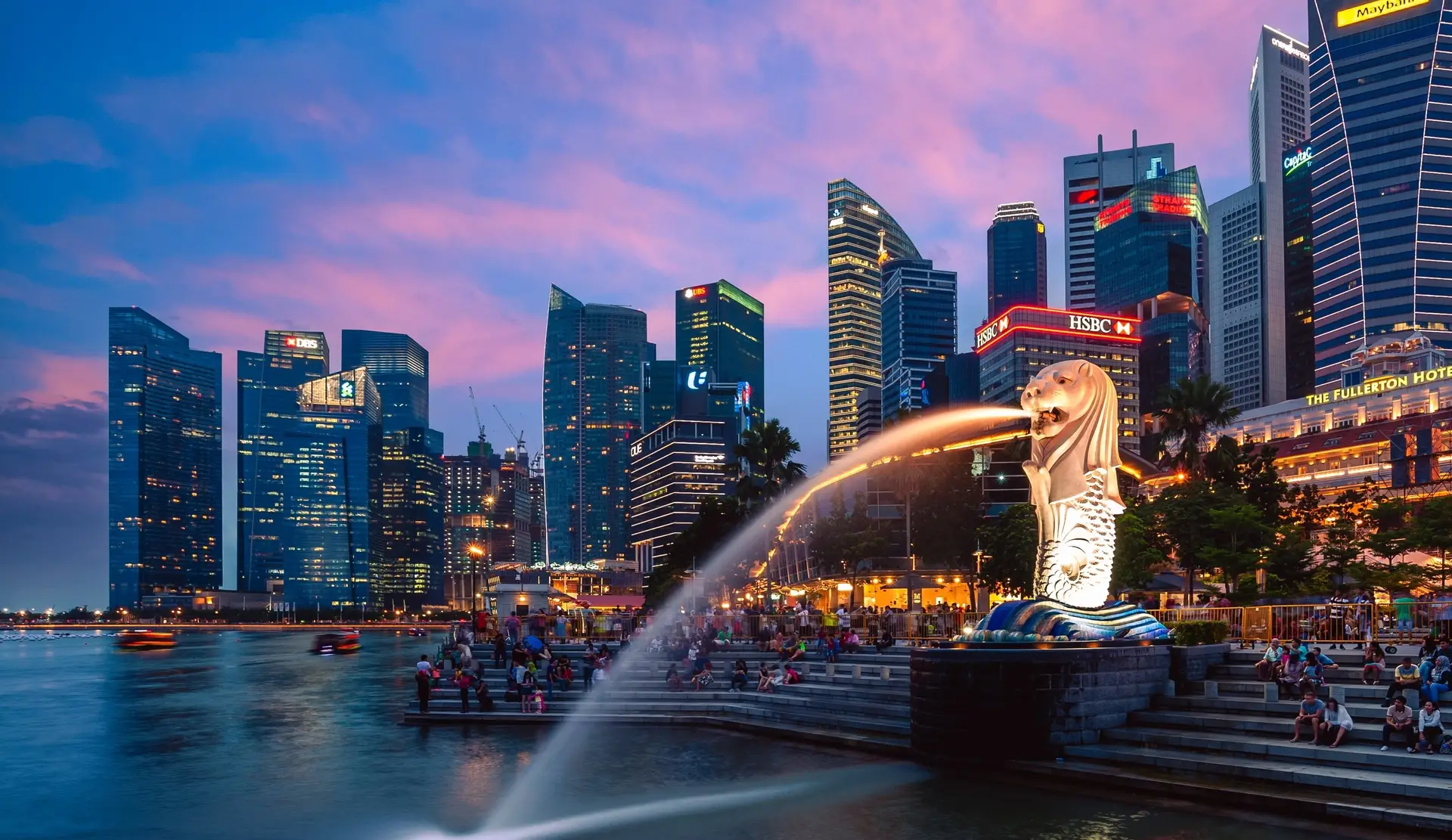
The Merlion and the Singapore central business district across Marina Bay at dusk
Singapore

We act between Australia and Singapore, and on contracts that choose Singapore law or a Singapore seat.

Boettcher Law is an Australian commercial law firm with offices in Sydney, Canberra and Frankfurt am Main. We advise Australian and German-speaking businesses on establishing and trading in Singapore, Singapore businesses on Australian law, and parties whose contracts are governed by Singapore law or seated in Singapore for arbitration.
Sydney · Canberra · Frankfurt a.M.
Offices
English and German
Working languages
Through registered Singapore counsel
Questions of Singapore law
Model Law seat
Singapore as an arbitral seat
Which way the work runs

The work runs three ways, and only two of them are a market entry.

A business may be arriving in Singapore, arriving in Australia from Singapore, or contracting under Singapore law and a Singapore seat without trading in either country. The third is a different kind of engagement from the first two. Scroll for the situations the work is most often called on from.
Into Singapore

Incorporating a Singapore subsidiary

Entity and constitution, the resident director and company secretary requirements, and the arrangements between the Australian parent and the new company.
Into Singapore

Appointing a distributor or agent for the region

The distribution agreement, the territory and the termination terms, and the trade mark position settled before the appointment is made.
Into Singapore

Moving people

Employment contracts measured against the Employment Act, and what the Australian entity keeps carrying for staff who remain employed here.
Into Singapore

Supplying goods on credit

Security and retention of title in a jurisdiction with no personal property securities register, where the registration deadline is 30 days.
Into Australia

Establishing an Australian subsidiary

Entity, the Australian resident director requirement, and the foreign investment position, which for a Singapore acquirer is the agreement-country threshold.
Into Australia

Selling to Australian customers

Consumer guarantees and unfair contract terms under the Australian Consumer Law, which the contract cannot exclude.
Neither market

A contract governed by Singapore law

Drafting and negotiating the governing law and dispute resolution clauses, and advising on what each will do when it is tested.
Neither market

An arbitration seated in Singapore

Acting in the arbitration, and on recognition and enforcement of the award in Australia.
Before you start

What an Australian business encounters in Singapore
The questions below arrive in most first meetings, in roughly this order. Each answer states the general position and is not advice on a particular transaction. Where a threshold is set by regulation or a regime is under review, the current position has to be confirmed at the time.
01
Most Australian groups incorporate a Singapore private company limited by shares. A branch is available, but it registers the Australian company itself as a foreign company in Singapore, and that registration must be in place before business begins. A distributor avoids both and gives away the customer relationship. Two Singapore requirements attach to the company from day one. One is familiar from home and is heavier here. The other has no Australian counterpart at all.
02
The office, and everything that attaches to it. A resident director appointed to satisfy the requirement is a director, with a director’s duties and a director’s exposure. Two features of Singapore law make that heavier than the appointment usually feels: the resignation is restricted, and personal liability for wrongful trading is not capped.
03
The Employment Act 1968 (Singapore) covers employees generally, managers and executives included. What the salary thresholds control is narrower than it is often taken to be: they govern Part 4, which carries hours of work, overtime and rest days. Above them the contract sets the working pattern, but a statutory floor of leave, public holidays and sick leave still applies.
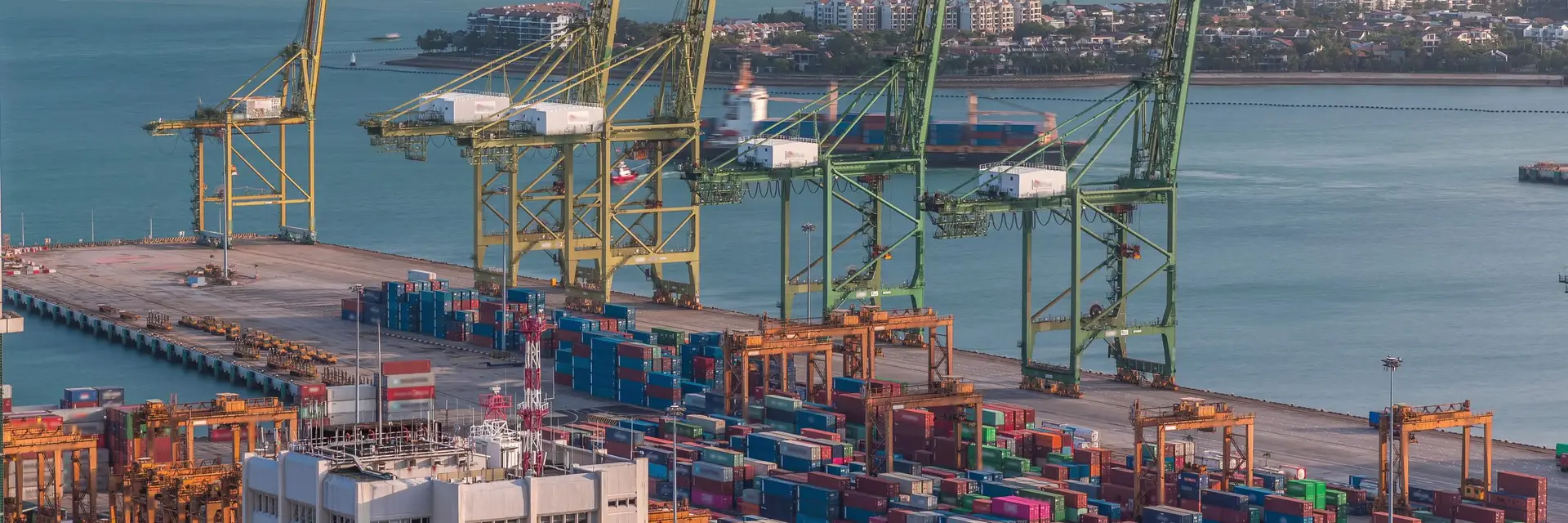
Container cranes and stacked containers at the Singapore container terminal
04
Singapore has no personal property securities register. Security over a company’s assets is registered as a charge under the Companies Act 1967 (Singapore), and the deadline is 30 days from creation. Miss it and the charge is void against the liquidator and any creditor, which on the customer’s insolvency leaves the lender where an unperfected Australian security interest would, by a different route.
05
If the premises are retail, a mandatory code applies and the lease is not simply a matter for the parties. Under the Lease Agreements for Retail Premises Act 2023 (Singapore), landlord and tenant of a qualifying lease must both ensure the agreement complies with the leasing principles in force when it is signed. It reaches a lease of one year or more, and it applies whether or not the lease says it is governed by Singapore law.
06
These are two clauses and two decisions, and they are regularly drafted as though they were one. Singapore is a credible choice for both, and its arbitration framework is the reason: the UNCITRAL Model Law has the force of law there under the International Arbitration Act 1994 (Singapore), so the seat behaves the way the parties’ advisers expect it to.
07
Consent becomes the organising idea, and someone has to be named. Under the Personal Data Protection Act 2012 (Singapore), an organisation must not collect, use or disclose personal data without consent or another authorisation, and it must designate an individual responsible for compliance and publish that person’s business contact information.
08
No. Registered rights are territorial, and an Australian registration gives nothing in Singapore. File in Singapore before a distributor, agent or reseller is appointed, because the appointment is what puts the mark in front of the people most able to register it first.
A container crane at the Port of Melbourne with the city skyline across the water
09
Foreign investment screening is more generous for a Singapore investor than for most, because Singapore is an agreement-country partner and the monetary threshold is correspondingly higher. Most of the rest of the Australian position is the same for you as for any foreign group, and the consumer law is the part most often underestimated.
10
Less than its name suggests, and something specific. The Singapore-Australia Free Trade Agreement shapes tariff treatment, services access and the investment screening threshold. It does not displace the domestic law either country applies to a company operating there, and it is not a shortcut through incorporation, employment, data or consumer obligations.
01 / 10
Subsidiary, branch or distributor?
Most Australian groups incorporate a Singapore private company limited by shares. A branch is available, but it registers the Australian company itself as a foreign company in Singapore, and that registration must be in place before business begins. A distributor avoids both and gives away the customer relationship. Two Singapore requirements attach to the company from day one. One is familiar from home and is heavier here. The other has no Australian counterpart at all.
The branch route is narrower than it looks, and the risk in it is the trigger. Under the Companies Act 1967 (Singapore) a foreign company must lodge its registration before it establishes a place of business or commences to carry on business in Singapore. Establishing a place of business is a low bar: a serviced office or a salesperson on the ground can meet it well before anyone treats the expansion as having begun, so a group can be in breach while it is still deciding. A subsidiary cannot drift the same way, because the entity has to exist before it can trade at all.
The branch does not avoid putting a person on the ground either. The registration must name one or more natural persons resident in Singapore as the company’s authorised representatives, authorised to accept service of process and notices on its behalf. So the choice is not two local people against none. It is two against one, carrying different duties.
The first of the two requirements is the resident director. Every Singapore company must have at least one director who is ordinarily resident in Singapore. Australian groups recognise the idea, because a proprietary company here has its own version, and they usually underestimate what it commits the appointee to. That is the next question.
The second has no Australian counterpart at all. A Singapore company must have a company secretary, and the secretary must be a natural person whose principal or only place of residence is in Singapore. An Australian proprietary company need not appoint a secretary. So the structure needs two people on the ground before it needs an office, and finding them is a longer task than incorporation.
One expectation is worth correcting while the structure is still open. A Singapore subsidiary is exempt from audit only if it is a small company and is also part of a small group, and the group is measured at the ultimate parent on consolidated revenue, consolidated assets and total employees. The Australian group is therefore counted, and a group of any size fails that test however small the Singapore company is. The subsidiary’s accounts are less private than the choice between the three structures suggests.
One question belongs before the entity and not after it. Singapore licenses by activity, and the presumption runs against the business. Under the Payment Services Act 2019 (Singapore), a person must not carry on a business of providing a payment service without a licence or an exemption, and where such a service is provided alongside another business it is presumed to be a business of providing it, a presumption that cannot be rebutted by showing the service was incidental to the main one. For a software or platform business, a wallet or a payments feature is a day-one structuring question.
02 / 10
What does the resident director actually take on?
The office, and everything that attaches to it. A resident director appointed to satisfy the requirement is a director, with a director’s duties and a director’s exposure. Two features of Singapore law make that heavier than the appointment usually feels: the resignation is restricted, and personal liability for wrongful trading is not capped.
The resignation point is the one that surprises. A director must not resign or vacate office unless there remains at least one director ordinarily resident in Singapore, and a purported resignation in breach of that is invalid. A nominee who wants out cannot simply give notice; a replacement has to be found first. Where the nominee is a service provider, read what the engagement says about how and when it ends.
The liability point is wider than its Australian counterpart in two ways. Under the Insolvency, Restructuring and Dissolution Act 2018 (Singapore), where a company has traded wrongfully the Court may declare a person personally responsible, without any limitation of liability, for all or any of the company’s debts. It reaches a person who knew of the wrongful trading, and an officer who ought in all the circumstances to have known. It is also not confined to directors: it reaches any person who was a party to the company trading in that manner.
The Court may relieve a person from that liability in whole or in part where the person acted honestly and ought fairly to be relieved. That is a discretion exercised after the event, and it is not a reason to treat the appointment as administrative.
03 / 10
Who does the Employment Act protect, and who does it not?
The Employment Act 1968 (Singapore) covers employees generally, managers and executives included. What the salary thresholds control is narrower than it is often taken to be: they govern Part 4, which carries hours of work, overtime and rest days. Above them the contract sets the working pattern, but a statutory floor of leave, public holidays and sick leave still applies.
Part 4 applies to workmen on a salary of not more than $4,500 a month, and to employees who are neither workmen nor in a managerial or executive position on not more than $2,600 a month. Both figures exclude overtime, bonuses, annual wage supplements, productivity incentive payments and allowances, and both may be varied by the Minister, so they are confirmed at the time and not carried forward from a previous engagement.
For an Australian employer the significance is structural, and it is easy to overstate in both directions. In Australia a modern award reaches most of the workforce and sets minimum rates, penalties, loadings and hours whatever the contract says, and the employer’s task is to identify the award and comply with it. Singapore has no equivalent instrument, so above the thresholds the working pattern is what the parties wrote. The floor underneath is not. Every employee the Act covers, an executive included, is entitled to paid annual leave of 7 days rising to 14, to public holidays and to paid sick leave. A contract carried across from the Australian business is usually drafted against an instrument that does not apply and silent on the terms that do.
Immigration runs on a separate track from employment law and on its own timetable. The pass a person holds constrains what they may be employed to do, and the pass position should be settled before an offer is made, not after it is accepted. One cover is not a commercial decision: under the Work Injury Compensation Act 2019 (Singapore) every employer must take out and maintain approved insurance against its liabilities under that Act for every employee, subject to prescribed excluded classes.
Related expertise
04 / 10
How do we take security, and does retention of title work?
Singapore has no personal property securities register. Security over a company’s assets is registered as a charge under the Companies Act 1967 (Singapore), and the deadline is 30 days from creation. Miss it and the charge is void against the liquidator and any creditor, which on the customer’s insolvency leaves the lender where an unperfected Australian security interest would, by a different route.
An Australian supplier arrives with the habits the Personal Property Securities Act 2009 (Cth) teaches: register on the Personal Property Securities Register, watch the purchase money security interest timing, and treat registration as the thing that makes the interest hold up. Those habits do not transfer. Singapore registers charges created by a company, in a prescribed form, with the Registrar, and the consequence of failure is stated in the same terms: the charge is void so far as any security on the company’s property is conferred by it.
Thirty days runs from the creation of the charge and not from the first supply, the first invoice or the first default, and there is no longer period for a charge created outside Singapore. On a facility negotiated across a border, the elapsed time between signing and someone remembering to lodge is the risk. The position is not beyond repair while the company is solvent, because the Court may extend the time where the omission was accidental or does not prejudice creditors, but that is an application and a discretion, not a right.
There is a consequence the Australian regime does not have. When a charge becomes void for want of registration, the money it secured immediately becomes payable. A lender that has lost its security also loses the term of the loan, which changes what the failure is worth to both sides.
Retention of title is a separate question and it is answered on the clause. A simple reservation of title until payment is not the same instrument as a clause reaching proceeds of sale or goods that have been mixed or manufactured, and whether a particular clause is a registrable charge has to be worked out before the goods ship. It is worth doing then, because the answer cannot be changed once the customer is in liquidation.
05 / 10
What happens when we take premises?
If the premises are retail, a mandatory code applies and the lease is not simply a matter for the parties. Under the Lease Agreements for Retail Premises Act 2023 (Singapore), landlord and tenant of a qualifying lease must both ensure the agreement complies with the leasing principles in force when it is signed. It reaches a lease of one year or more, and it applies whether or not the lease says it is governed by Singapore law.
That last point is the one to hold, because it defeats the usual instinct. Choosing a foreign governing law for the lease does not take the agreement outside the regime: the definition of a qualifying lease says so in terms. Where the agreement departs from a leasing principle and the landlord does not declare the deviation as required, the deviation is void.
The one-year test is measured on the term as granted. Any period for which the lease may be extended or renewed is disregarded, so a six-month term with options to renew is not a qualifying lease even though the occupation may run for years. That is the opposite of the way an Australian lawyer counts a term for foreign investment purposes, and reading it the familiar way gets the answer backwards in both directions.
Whether particular premises are retail premises for the Act is a classification question answered against its own schedule, and offices and industrial space are not assumed to be inside it. The question is worth settling before heads of agreement are signed, because the code shapes terms that are otherwise negotiated first and papered later.
Related expertise
06 / 10
Which law should the contract choose, and where do disputes go?
These are two clauses and two decisions, and they are regularly drafted as though they were one. Singapore is a credible choice for both, and its arbitration framework is the reason: the UNCITRAL Model Law has the force of law there under the International Arbitration Act 1994 (Singapore), so the seat behaves the way the parties’ advisers expect it to.
The governing law decides what the contract means. The dispute resolution clause decides who says so, where, and what can be done with the answer. Singapore law and a Singapore seat frequently go together and do not have to: a contract may be governed by Australian law and seated in Singapore, and that combination is sometimes the right one where neither party will accept the other’s courts.
For an award or a judgment to be worth having it must reach the assets. Both routes work on this axis, and they do not work equally. A money judgment of the Supreme Court of Singapore can be registered in Australia under the Foreign Judgments Act 1991 (Cth), because that court is one of those listed for the purpose. An award made in Singapore is enforceable in Australia under the International Arbitration Act 1974 (Cth), which gives effect to the New York Convention, and it is also enforceable in the many other countries party to that convention. Where the counterparty’s assets may end up in a third country, that difference is the decision.
The clause itself is where the value is won or lost. A clause that names an institution inaccurately, leaves the seat unstated, or makes arbitration optional will be argued about before anything else is, and the argument happens at the worst moment.
07 / 10
What changes for personal data?
Consent becomes the organising idea, and someone has to be named. Under the Personal Data Protection Act 2012 (Singapore), an organisation must not collect, use or disclose personal data without consent or another authorisation, and it must designate an individual responsible for compliance and publish that person’s business contact information.
The designation obligation is the one that shows up in an audit, because it is visible from outside. The individual must be designated, and the organisation must make available to the public the business contact information of at least one designated or delegated individual. An Australian business has no equivalent obligation to appoint or publish a named officer, so this is usually a genuine gap and not a paperwork exercise.
Designating someone does not move the responsibility. The Act says so expressly: the designation does not relieve the organisation of its own obligations. The appointment is a compliance function, not a transfer of risk.
The obligation an Australian parent trips first is not either of those. Personal data may not be transferred out of Singapore except in accordance with prescribed requirements ensuring a comparable standard of protection, so the ordinary first act of integration, pointing the Singapore entity’s customer and staff data at systems in Sydney, is a regulated transfer and has to be arranged as one. Breach notification is faster than here as well: once an organisation assesses a breach as notifiable it must tell the Commission as soon as practicable and no later than 3 calendar days.
The two regimes are close enough to be dangerous. A privacy policy written for Australian operations will read plausibly in Singapore and will not carry the consent architecture, the named individual or the transfer arrangements, which is the same failure pattern as an Australian employment contract used for a Singapore hire.
08 / 10
Do trade marks and other IP travel with us?
No. Registered rights are territorial, and an Australian registration gives nothing in Singapore. File in Singapore before a distributor, agent or reseller is appointed, because the appointment is what puts the mark in front of the people most able to register it first.
The sequence matters more than the cost. Filing is inexpensive against the value of the mark and against what it costs to buy a registration back from a former distributor. Deciding which entity in the group owns the registration is the part that is difficult to unwind later, and it should be settled while the structure is still open.
The same point applies to anything licensed into the region. Where software, know-how or brand is being made available to a Singapore entity, the licence should say what is licensed, on what terms and what happens on termination, and it should say it before the first customer relies on the product.
Related expertise
09 / 10
We are the ones coming to Australia. What is different for us?
Foreign investment screening is more generous for a Singapore investor than for most, because Singapore is an agreement-country partner and the monetary threshold is correspondingly higher. Most of the rest of the Australian position is the same for you as for any foreign group, and the consumer law is the part most often underestimated.
The threshold difference is real and it is not the whole test. An agreement-country investor is not caught until a substantially higher figure than the general threshold, which is the reverse of the position a German or other non-agreement investor faces. But several categories are notifiable at any value regardless of the investor’s nationality, and the threshold follows the entity that actually acquires, so a Singapore group buying through a subsidiary elsewhere is measured against that place, not against Singapore.
The Australian Consumer Law is the surprise. Consumer guarantees attach to goods and services supplied to Australian customers and cannot be excluded by the contract, and the unfair contract terms regime reaches standard form contracts with small businesses and not only with consumers. Terms drafted for a market where freedom of contract does more of the work will not have the effect they appear to have.
The higher threshold does not cover the transaction a trading business is most likely to sign. Vacant commercial land is notifiable at any value, and an interest in Australian land includes a lease whose term together with any options is reasonably likely to exceed five years. An ordinary ten-year warehouse lease can therefore sit inside the regime while the acquisition figures are nowhere near the threshold.
If you supply goods on credit into Australia, the position reverses on you. Retention of title here is a security interest under the Personal Property Securities Act 2009 (Cth), and an unregistered one vests in the customer on their administration or winding up, so the supplier ranks as an unsecured creditor for goods it believed it still owned. For inventory the registration must be in place by the time the customer takes possession. Singapore practice offers no equivalent habit to carry across, which is what makes this one bite.
An Australian proprietary company must have at least one director who ordinarily resides in Australia, so the requirement you already satisfy at home has a mirror here, and it is a real appointment on this side as well.
10 / 10
What does the free trade agreement do for us?
Less than its name suggests, and something specific. The Singapore-Australia Free Trade Agreement shapes tariff treatment, services access and the investment screening threshold. It does not displace the domestic law either country applies to a company operating there, and it is not a shortcut through incorporation, employment, data or consumer obligations.
The distinction worth holding is between market access and market conduct. An agreement can make it easier to get in and cheaper to trade across the border, and the investment threshold above is a concrete example. Once the business is operating in the other country it is a business operating in that country, subject to that country’s law on every question in this page.
Where goods are involved, tariff treatment turns on rules of origin and on the documentation being right at the time of import. That is work for a customs adviser and the freight forwarder, and it is worth confirming before pricing is committed to a customer.
Three Boettcher Law lawyers at a meeting room table with laptops and papers
How the work runs

How an engagement begins, and what the first month involves

01

A first conversation, at our cost

Describe the commercial objective. The first conversation is not charged, and it is usually enough for us to say whether the work is straightforward, whether an accountant should go first, and what it will cost.
02

A scope and a figure, in writing

A costs agreement setting out the work, who does it and what it costs. Where the scope is genuinely fixed, so is the fee. Where it is not, we identify what would move it, and you are told before it moves.
03

The Singapore-law questions, answered in Singapore

Where a question is one of Singapore law, it is answered by counsel registered to practise it there. We run the matter and hold the relationship, and the Singapore answer comes from Singapore.
04

The structure, then the documents

Entity, appointments and registrations first, because the contracts assume them. Where tax drives the structure, the accountant’s numbers come before the drafting and we sequence the work that way.
The boundary

Where our work stops and an accountant's begins

We are lawyers. We advise on the entity, the constitution, the shareholder arrangements, the employment and commercial contracts, the intellectual property, the regulatory questions, the governing law and dispute resolution clauses, and the disputes themselves. On questions of Singapore law we act with counsel registered to practise it in Singapore.
We do not advise on tax. The choice between a subsidiary and a branch has a tax answer as well as a legal one; how the Singapore entity is funded raises transfer pricing and thin capitalisation; and the goods and services tax and withholding positions in both countries belong with an accountant, as does the treaty between them.
Payroll is the same boundary and it catches people out, because it looks like employment law. What is contributed for an employee in Singapore, and for which employees, is a payroll and tax question settled with the accountant before the first hire, not an inference from the employment contract. We work with an accountant on this and can recommend one.
Who you would work with

The people who would run it

Fabian Hoffmann, Principal at Boettcher Law

Fabian Hoffmann

Principal
Corporate, commercial and cross-border work, and the German-speaking client base. Admitted in the Australian Capital Territory as a barrister and solicitor, and appears without counsel. Works in German and English.

Sebastian Blasius

Registered Foreign Lawyer, Gateway Law Corporation, Singapore
The Singapore end of the work. A German Rechtsanwalt who has practised in Singapore since 2015 and is registered under section 36B of the Legal Profession Act 1966 (Singapore) to practise Singapore law as well as foreign law, so a question of Singapore law is answered in Singapore by a lawyer entitled to answer it. He works in German and English.
Questions people ask

The short ones

How quickly can a Singapore company be set up?

Incorporation itself is quick. The constraint is people: a director ordinarily resident in Singapore and a company secretary resident there are both required, and finding them takes longer than the filing does.

Can we use a nominee resident director?

It is common, and it is a real appointment carrying a director’s duties. Read what the engagement says about how it ends, because a director cannot resign if that would leave the company without a resident director, and a resignation in breach of that is invalid.

Do we need a Singapore entity to sell into Singapore?

Not necessarily. Selling from Australia under a distribution or supply agreement is a different structure with different risks, and it is worth pricing both before committing to an entity.

Is our Australian employment contract usable in Singapore?

Not as it stands. It will be drafted against a modern award and the National Employment Standards, neither of which applies, and silent on the terms that will govern instead.

Does our Australian trade mark protect us in Singapore?

No. Registered rights are territorial. File in Singapore before appointing a distributor or reseller.

Should the contract be governed by Singapore law?

Sometimes, and it is a separate decision from where disputes are heard. The two clauses are frequently drafted as one and should be decided one at a time.

Will a Singapore arbitration award be enforceable in Australia?

Yes, through the International Arbitration Act 1974 (Cth), which gives effect to the New York Convention. Enforcement where the assets actually are is the practical question to ask when the clause is drafted.

Do you advise on Singapore law yourselves?

We run the matter and hold the relationship. Questions of Singapore law are answered by counsel registered to practise Singapore law there, and we brief and work with them.

Can you advise us in German?

Yes, in writing and in conference. Documents are usually in English, because they are governed by Australian or Singapore law and may have to be read by a court or a tribunal in one of those places.

Tell us what you are trying to do in Singapore

A short description of the commercial plan is enough to begin. We will set out what is involved, what it costs, and whether your accountant should go first. In English or in German.
Please note
A situation not listed here is usually a variation on one of them.

Sydney

Canberra

Frankfurt a.M.