










Corporate & Commercial

Contracts, structures and governance for businesses that need the paperwork to hold when something goes wrong.

Mergers & Acquisitions

Buying or selling a business, from the term sheet and due diligence through to completion and the restraints that follow.

Litigation & Dispute Resolution

Commercial disputes in the NSW, ACT and Federal courts, resolved early where that is possible and run properly where it is not.

Government and Defence

Supplying government and the defence industry.

Technology and Software

Your product scales digitally. Your contracts have to scale with it.

Financial Services

A regulated business, on solid legal footing.

Associate

Sydney or Canberra, five years post-admission and up.

Special Counsel

Sydney or Canberra, typically eight years and up.

Associate Partner

Sydney or Canberra, a practice you are building.

Wahlstation for German Referendare

Sydney or Canberra, open all year.

Articles

Where the law changed, what it now requires, and what a business has to do about it.

Guides

One question worked through end to end, with the provisions and the decisions it rests on.

Case notes

What a judgment decided, and what follows from it for anyone in the same position.

Germany

A German desk for businesses moving between Australia and the German-speaking market.

Singapore

Singapore law where it governs the contract, and the arbitral seat that carries much of the region’s work.

Vietnam

Market entry, supply arrangements and dispute resolution for Vietnam.

APPEARANCES

Boettcher Law at the German-Australian Business Day in Canberra

21 October 2026
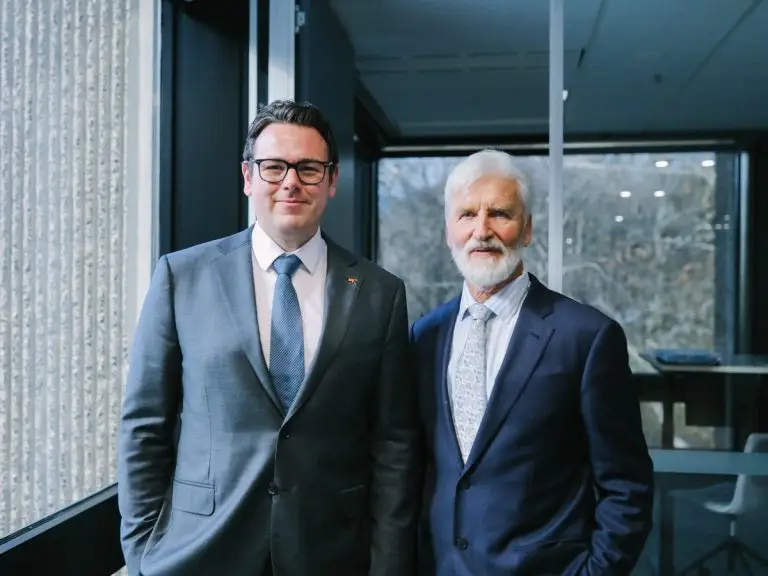
The University of Canberra Business School and the German-Australian Chamber of Industry and Commerce held the German-Australian Business Day 2026 at the University of Canberra on 21 October 2026, during German Week Canberra. The theme was AI and technological innovation across business functions, and the German-Australian economic and innovation partnership.
Fabian Hoffmann introduced the Chamber and its work on its behalf, then spoke on the panel about what a business actually owns when it uses AI to make something it means to commercialise. Copyright exists because a person made something, and it gives the maker a monopoly for a time so that the work can be turned to account. That leaves out what a machine makes, and a contract can divide rights between the parties to it but cannot create one that does not exist.
The wider question he put to the panel was a policy one. If AI does more of the work while the population ages, the value it produces has to be taxed or otherwise captured, so that it still funds what work used to fund, retirement among it.

Sydney

Canberra

Frankfurt a.M.