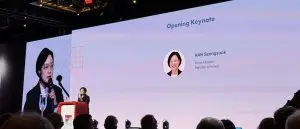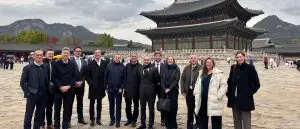



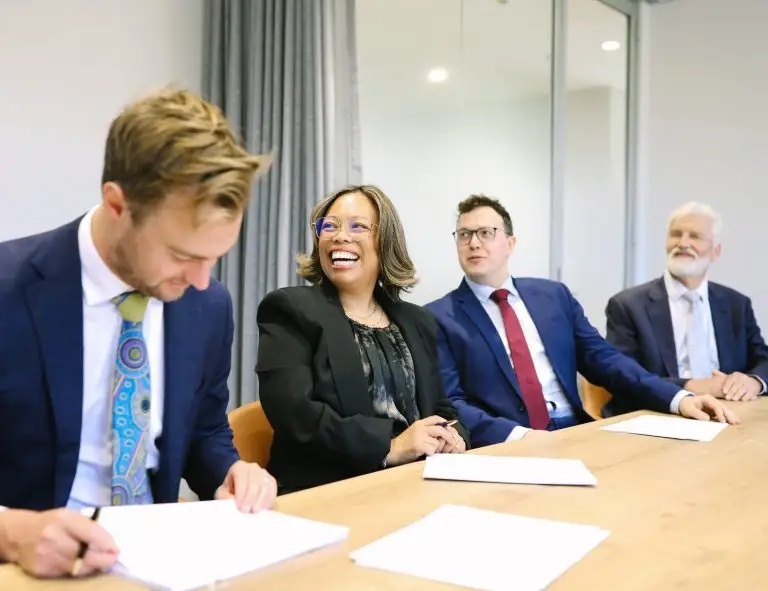
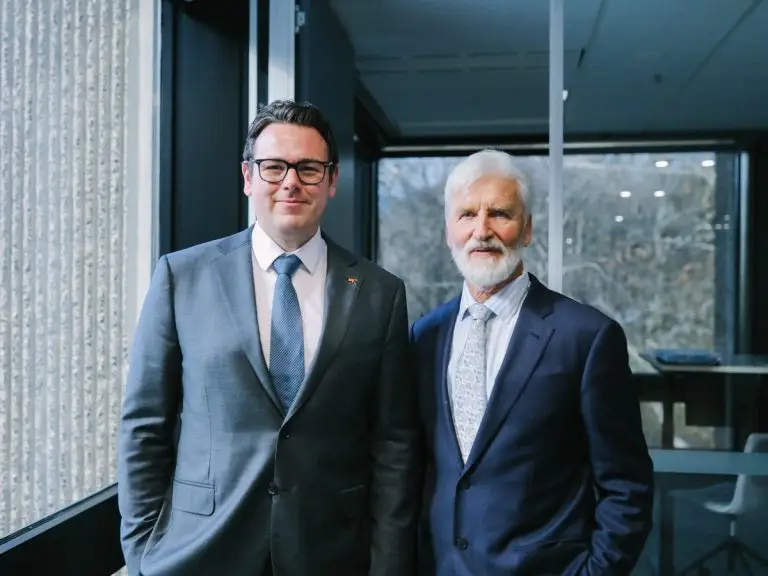



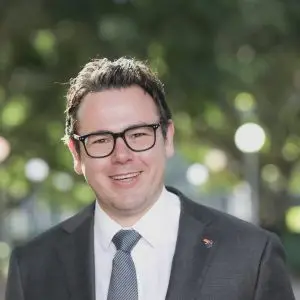
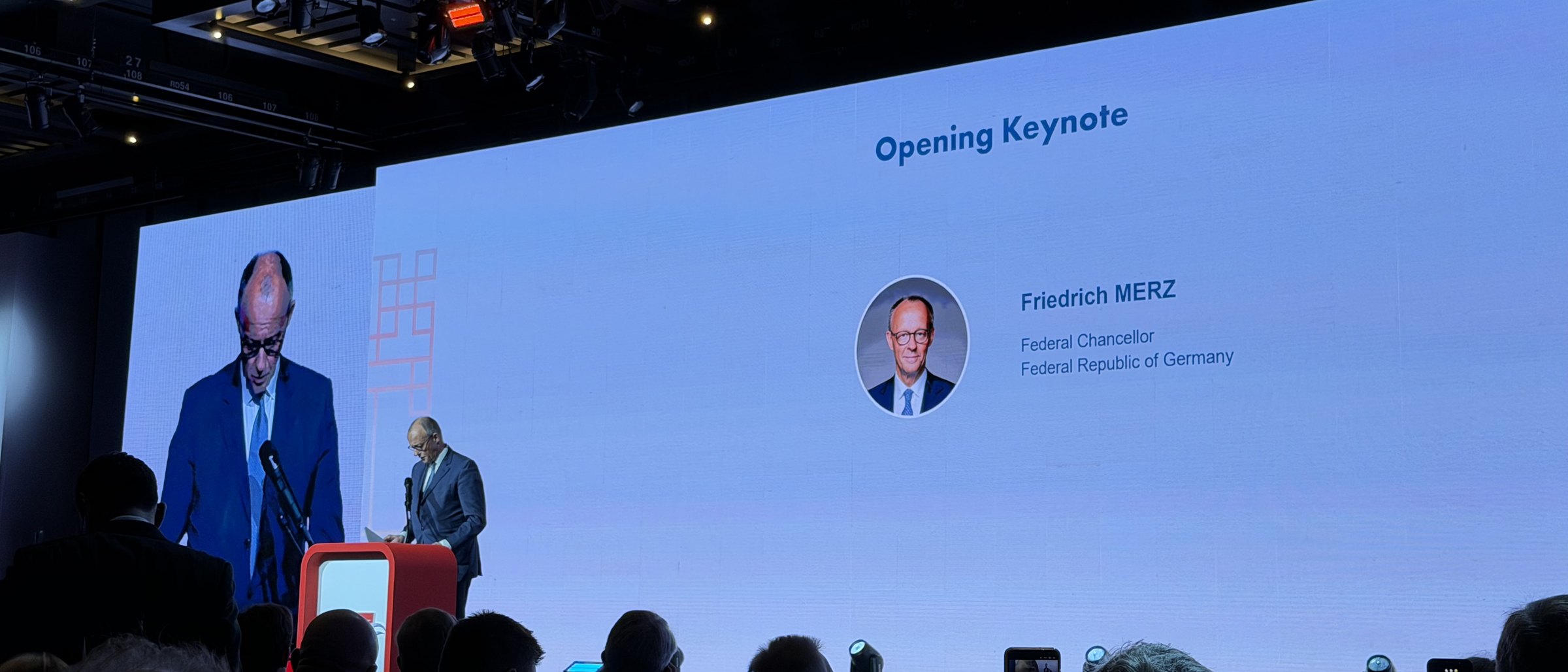
Boettcher Law attended the conference, held from 29 to 31 October 2026, with the AHK Australia delegation. This summary of the Chancellor's keynote on Friday 30 October follows the Federal Government's report and the recording made in the room, as we have not located a published text. It closes with Fabian Hoffmann's view from practice.
What did the Chancellor say has changed in the Indo-Pacific?
The region has become the centre of gravity for German business, and the Chancellor said the conditions that made that possible are under pressure. When the first Asia-Pacific Conference was held in 1994, he recalled, German trade with the region was a fraction of today's. It has since more than quadrupled, more than one in five euros of Germany's foreign trade is now generated there, and the region accounts for well over 40 per cent of global economic output. The Indo-Pacific, he said, is the economic powerhouse of the 21st century.
He described the partners in tiers: highly industrialised nations such as Australia, Japan and Singapore; emerging heavyweights such as India and Indonesia; and developing countries.
Against that record he set the present. China remains Germany's largest single trading partner, but economic imbalances, market-distorting practices and the targeted use of economic power to exert political pressure shape the relationship. Russia's war against Ukraine and escalation in the Middle East burden supply chains, energy and investment, and the security of shipping in the South China Sea and the Strait of Hormuz is at stake. Competition between the United States and China, technological decoupling and the race for critical raw materials are changing the rules. When supply chains become political tools, he said, growth, prosperity and ultimately the security of whole regions are at risk.
Why does he say de-risking is not decoupling?
The Chancellor's answer is diversification, and he drew a firm line between de-risking and decoupling. The changed landscape, he said, is bringing like-minded partners closer together, and Germany and its partners stand together against unilateralism, autocratic power politics and violations of international law.
De-risking, he said, does not mean decoupling or new protectionism: countries that decouple lose security, innovation, strength and prosperity. The aim is to widen freedom of action by trading and cooperating more, on fair rules. The Federal Government's report puts the same point as active de-risking through fair raw materials and technology partnerships.
What is the proposed alliance for rules-based trade?
The centrepiece was a proposal that like-minded states jointly establish a global political alliance for rules-based trade. Where free trade and the rules-based order come under pressure, he said, the European Union will take the lead. He pointed to the EU's network of free trade agreements, called the 2011 agreement with Korea a milestone, and said he had personally worked to bring the negotiations with India and Australia to a conclusion. Those agreements, he said, must now be implemented, and built on.
He called for the existing agreements to be aligned so that businesses can use them together, and for interregional agreements that reflect interconnected supply and production chains. Because the rules-based trading system itself needs support, the alliance would defend it politically, help strengthen and facilitate new trade agreements and, where necessary, act jointly. In the Federal Government's summary, like-minded states would shape fair international trade policy together.
What did he say about Korea, AI and German business?
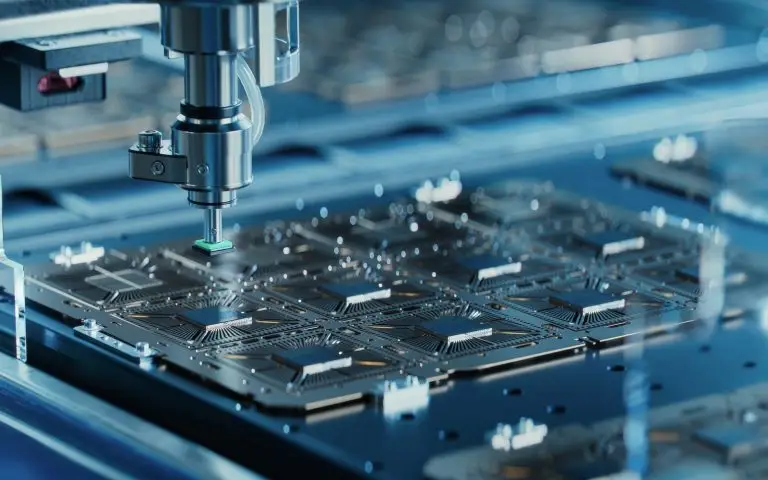
The Chancellor said the structural similarities between German and Korean industry give ample room for closer cooperation, and welcomed a high-tech agreement with Korea covering next-generation fields such as microelectronics, industrial AI and robotics. Germany's small and medium-sized enterprises, he said, show daily how AI creates real value. AI needs innovation, but also physical foundations and clear guardrails: chips, raw materials and affordable, reliable energy. He closed on complementary strengths: German research, engineering and specialised enterprises, and the region's adaptability, speed and first-class physical resources.
Fabian Hoffmann's view: what the alliance has to deliver
I share the Chancellor's diagnosis and his line between de-risking and decoupling. My questions are about delivery. I advise German companies doing business in Australia and the region. The rules-based order does not reach them as a principle. It reaches them as a tariff schedule, a rule of origin, a foreign investment approval, an arbitration clause, and an award that can be enforced where the counterparty's assets are. Measured against that, the speech raises four questions.
First, what does a political alliance mean for a mid-sized German company? A shared declaration changes no duty rate and no approval condition. The speech said the alliance would defend the system, facilitate agreements and act jointly where necessary. Until it is clear what joint action means, who decides on it, and how it sits beside existing dispute settlement in world trade, a business cannot plan around it.
Second, the gap between agreements concluded and agreements in force. The Chancellor was candid that concluded agreements must now be implemented. The EU-Australia agreement he mentioned concluded negotiations in March 2026 and is still being adopted and ratified. Until it is in force, nothing changes at the border for our clients. I would put implementation of what is already negotiated ahead of any new framework, and I read the speech as accepting that.
Third, where does Australia sit? The Chancellor placed Australia among the most advanced partners, beside Japan and Singapore, and named raw materials among the foundations of AI. That is the right place. The concrete deliverables in Seoul were Korean, as they should be at a conference in Korea. German businesses in Australia will ask whether Australia's resources and its own agreements will be built into the alliance, or left at its edge as a supplier.
Fourth, de-risking has a cost, and someone carries it. Diversified supply means second suppliers, longer qualification periods, and contracts that allocate sanctions, export control and shipping risk. The speech names those risks well. Companies absorb them, in their contracts. Aligning the existing agreements so businesses can use them together, as the Chancellor proposed, is the kind of practical support that would be felt directly.
Behind all four sits enforcement. When a German supplier and an Asian counterparty fall out, the order that matters is the dispute resolution clause, the seat of the arbitration and whether the award can be enforced. An alliance that strengthened that layer as well as the treaty layer would make the rules real for the companies in the room. The direction is right. The test is whether a German company can soon point to something in the alliance it can use.
Where does Boettcher Law fit?
Boettcher Law advises German businesses in Australia and the Asia-Pacific on cross-border structuring, commercial contracts, foreign investment approvals and disputes, including Singapore-seated arbitration. The firm has offices in Sydney, Canberra and Frankfurt.
APK Seoul 2026
- Boettcher Law at the Asia-Pacific Conference of German Business
- Critical minerals at APK 2026: Germany and Australia
- What APK 2026 heard about the EU-Australia free trade agreement
- German Defence Suppliers in Australia: APK Seoul 2026
- Doing Business in Korea and South-East Asia: APK 2026
- Korea-Germany cooperation: the Prime Minister at APK 2026
This article reports views expressed at the conference and the author's own view. It is not legal advice.