









Speakers at the 19th Asia-Pacific Conference of German Business (APK) in Seoul saw the opening for German defence suppliers in Australia in modules, subsystems and joint development with Japanese and Korean partners, against an Indo-Pacific security picture that is pushing Australia to diversify its partners.
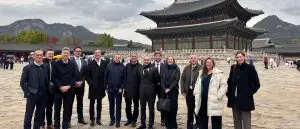
Fabian Hoffmann attended the conference, held from 29 to 31 October 2026, with the AHK Australia delegation. This article reports what was said on defence and security at the delegation's briefings and the AHK lunch session on Japan, Australia and New Zealand.
How has the Indo-Pacific security picture changed?
Both ambassadors who briefed the delegation described stable relationships operating in a changed environment. Jeffrey Robinson, Australia's Ambassador to Korea, said the Australia-Korea relationship had not fundamentally changed, but the environment around it had, citing the challenge from China and the challenges posed by the current United States administration. He described a close partnership between Australia, Japan and Korea as not only desirable but imperative. Korea, he said, traditionally saw the United States as its one natural partner, no longer thinks that way, and wants to diversify into trusted supply chains.
Beate Grzeski, Germany's Ambassador to Australia, said the United States remains indispensable to Australia in security terms. With no EU and no NATO around it, Australia carries a fear of abandonment and needs a large supporter. She pointed to the open questions in AUKUS: whether the United Kingdom can deliver the nuclear component and the United States the submarines. She also noted growing Australian concern about foreign interference and espionage, with Australia's security services saying publicly that recruitment increasingly runs through LinkedIn.
What has changed for foreign defence investment in Australia?
Angelika Yates, a partner of Addisons and a speaker on the lunch panel, said foreign defence companies investing in Australia have moved from a supplier model to being an integral part of Australia's national security structure. She named four developments of the last five years:
- In 2021, she said, Australia's foreign investment framework was reformed to add a national security test, and for national security businesses, which by their nature include defence businesses, foreign investment approval can be required whatever the value of the investment.
- In 2022 Australia, Japan, Korea and New Zealand formed the Indo-Pacific Four (IP4), an informal grouping working alongside NATO.
- In 2024 Australia issued seven Sovereign Defence Industrial Priorities, among them, she said, building up manufacturing capability in the defence sector.
- In March 2026, as negotiations for the EU-Australia free trade agreement concluded, the EU and Australia entered into a Security and Defence Partnership.
Ambassador Grzeski named the same partnership, with the free trade agreement and Horizon Europe, as evidence that Australia wants Europe. Bilaterally she cited a 2+2 meeting in Berlin, intensified military cooperation, and German defence industry enlarging its Australian presence, including in ammunition. Germany has taken part in the Pitch Black and Talisman Sabre exercises and once sent a frigate to Australia, because, she said, its export routes run through the region's waters.
Where are the openings for German defence suppliers?
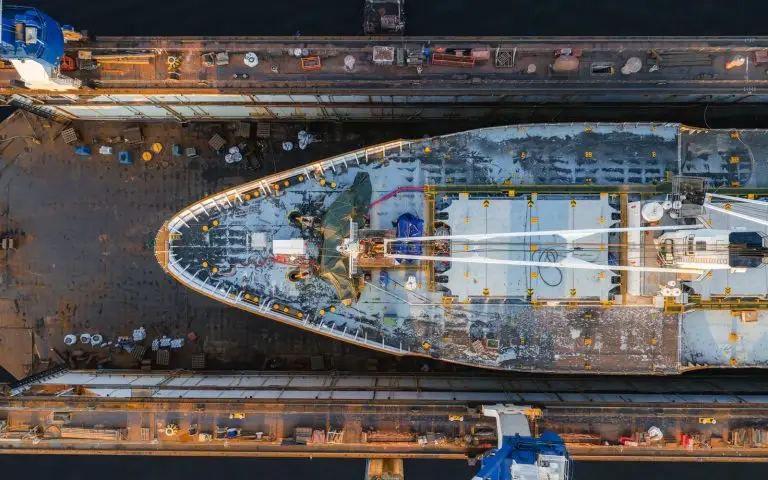
The panel located the openings in parts of platforms and in joint development, not in complete ships. A panellist representing a major German shipyard said he did not expect Germany to sell a complete ship or submarine to Japan, or Japan to Germany. Money is not the constraint; time to market is, and engineering and shipbuilding capacity is limited. The potential lies in joint development and in modules, such as a communication module or a weapon control system taken from a partner and installed in one's own product to reach the market faster and at lower cost.
He placed German strength in system integration and in working with navies to differing specifications and interfaces, and Japanese strength in precision. Ms Yates set out what each country brings: Germany engineering depth; Japan precision manufacturing, electronics and sensors; Australia access to critical minerals, energy supply security and a large territory for testing equipment. Australia is not yet strong in manufacturing, wants to build it, and depends on partners to do so.
She gave two examples. The German warhead maker TDW has signed a letter of intent with Australia's Department of Defence on manufacturing warheads for naval missiles in Australia, near Newcastle. Australia and Japan are co-developing the Boobook laser system for detecting incoming threats.
Looking two years ahead, the shipyard representative pointed to Australia's planned eleven general purpose frigates from Mitsubishi Heavy Industries and the local content Australia requires, and suggested German subsidiaries in Australia could supply subsystems locally. Ms Yates wanted a true trilateral co-development project, perhaps a satellite-based maritime surveillance system sharing data between the three countries.
Korea competes for the same market. Ambassador Robinson said Korean supply to the Australian military was implausible twenty years ago; Korea then made defence industry a national priority and now has very large defence industry players. In one Australian defence competition, Australian military officers told him the Korean bidder asked what Australia needed, and learned the Australian system quickly. An embassy trade officer said Hanwha's decision to move weapons manufacturing offshore is partly about having production away from the peninsula. Hanwha builds armoured vehicles in Geelong.
What stands in the way?
The speakers named distance, differing requirements, the United States relationship and procurement law. The shipyard representative cited the distance between the three countries and their different strategic positions: Australia a continent of its own, Japan bordered by Russia, North Korea and the South China Sea, Germany rooted in NATO. A common denominator is hard to find, though not impossible.
Ms Yates said the close military-to-military relationship between Australia and the United States means German and Japanese companies often lose public procurements to American competitors. She described Australian procurement law as opaque, with decisions harder to challenge than in Europe, and preferred case-by-case co-development projects with a business case to a formal alliance on the AUKUS model.
Ambassador Robinson said Korean investors see Australia as a complex and sensitive regulatory environment. At the German briefing, a delegate said a work visa applied for from overseas can take thirteen months, which makes it hard to commit staff to a project.
What should German and Australian businesses take from this?
For a German defence or dual-use supplier, the discussion points to a subsystem strategy built around Australian primes and local content. On what was said:
- Define the module or subsystem and the platform it serves, and identify the prime, including Japanese and Korean primes leading Australian programmes.
- Check early whether foreign investment approval is needed for the planned investment, given Ms Yates's account of the national security test.
- Build local presence to meet local content requirements: an Australian entity, and local assembly or manufacturing where the programme requires it.
- Expect American and Korean competition. Ambassador Grzeski's case for like-minded suppliers was security: no kill switch built in, even at a somewhat higher price.
- Treat the tender stage as decisive, given Ms Yates's view that procurement decisions are hard to challenge afterwards.
- Start visa planning for engineers and technicians at the bid stage.
For Australian businesses, a German partner with subsystem capability is one route to the manufacturing capability and local content Australian programmes seek.
Where does Boettcher Law fit?
Boettcher Law advises German businesses in Australia from offices in Sydney, Canberra and Frankfurt. For defence and dual-use suppliers, that work covers establishing the Australian entity, contracts and teaming arrangements with primes and subcontractors, foreign investment approval, the groundwork for security clearance and compliance requirements, and disputes, including tender and contract disputes. The firm is a Platinum Partner of AHK Australia.
APK Seoul 2026
- Boettcher Law at the Asia-Pacific Conference of German Business
- Critical minerals at APK 2026: Germany and Australia
- What APK 2026 heard about the EU-Australia free trade agreement
- Doing Business in Korea and South-East Asia: APK 2026
- Chancellor Merz at APK 2026: an alliance for fair trade
- Korea-Germany cooperation: the Prime Minister at APK 2026
This article reports views expressed at a conference and is not legal advice.