




Doing business in Korea, on the account given to the AHK Australia delegation in Seoul, starts with certification, trade mark filing and employment and privacy compliance, and depends on a written record of every agreement. For South-East Asia, speakers described Singapore as the regional hub and Malaysia and Indonesia as markets usually worked through local partners.
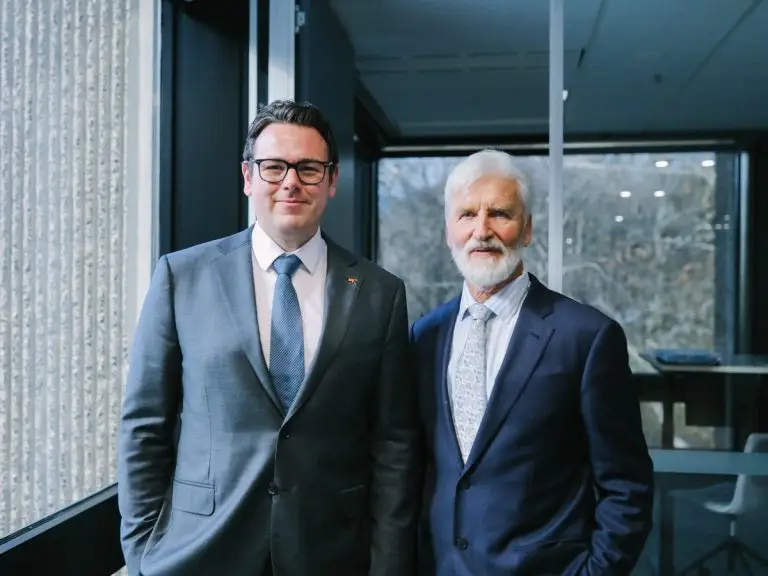
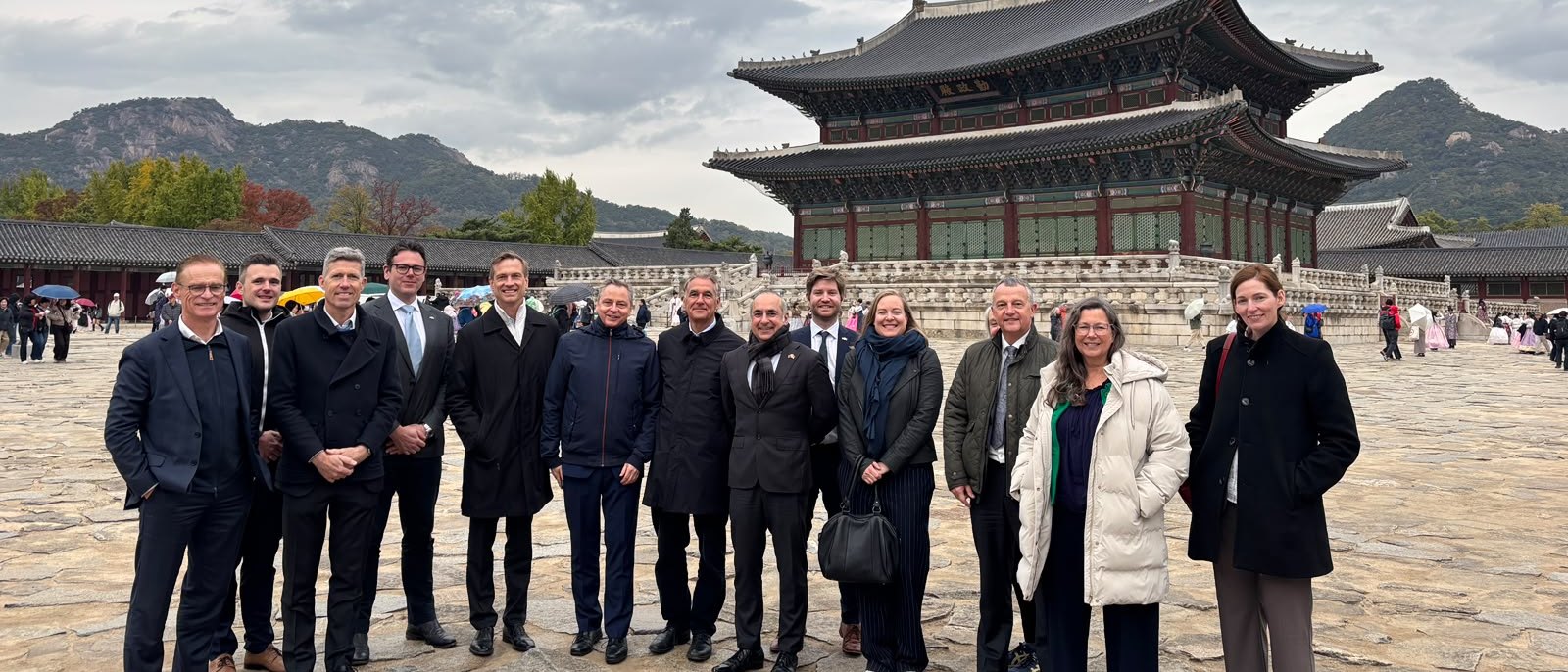
Fabian Hoffmann attended the 19th Asia-Pacific Conference of German Business in Seoul, 29 to 31 October 2026, with the German-Australian Chamber of Industry and Commerce delegation. This article reports what the briefings said on market entry, for a business looking at the region from Australia.
Where does Korea stand as a partner for Australia?
Korea is a large export market for Australia and a small investor in it, and the Australian Ambassador to Korea, Jeffrey Robinson, told the delegation he expects that gap to close. He said Korea has for many years been Australia's third largest export market, with one recent exception, when a surge in Australian gold exports lifted the United States above it.
On investment, he put Korea third as an export market but nineteenth as a source of investment in Australia, and said Korean investors see Australia as a complex and sensitive regulatory environment. He expected Korean investment to grow in critical minerals, hydrogen and agriculture. He said bilateral trade has doubled since the free trade agreement concluded in 2014, and that a Korean presidential visit to Australia was being planned, with up to ten ministers and more than 200 Korean companies expected to take part, although no date had yet been fixed.
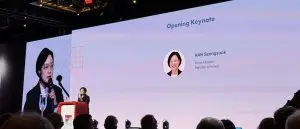
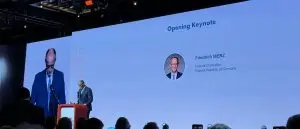
For German businesses, the German keynote at the opening session welcomed a high-tech framework agreement with Korea, signed the day before, covering microelectronics, industrial AI and robotics.
What must be in place before selling in Korea?
The Kim & Chang briefing put product certification and trade mark registration ahead of the first sale. The briefing covered the legal system, market entry, certification, employment, privacy and intellectual property, and the speakers said each of these could fill a day on its own.
On entry vehicles, they outlined the options open to a foreign company, including a branch office and a locally incorporated company. In questions, a speaker described one form of office as used for marketing and research rather than for generating revenue directly.
On certification, the speakers described separate regimes for electrical and consumer products, for radio equipment such as smartphones and wearables, and for medical devices. A wrong or missing certificate, they said, can have serious consequences, including recalls. Their examples came from the automotive sector, including certification problems for car makers and vehicle fires whose videos spread widely.
On trade marks, the advice was to register early, before someone else files the mark first.
What do Korean employment and privacy rules demand?
Kim & Chang presented employment and privacy as two of the main compliance areas for a business entering Korea. On employment, they covered employee representation, severance and the responsibilities of management, and said that working conditions, once set, can be very difficult to change.
On privacy, they described personal information as a broad concept that extends to online data, said a breach must be notified within a set time, and said violations can bring fines and criminal liability. The example discussed was a recent data breach in which, as it was described in the session, a former employee had access to customers' personal data for months.
Speakers added that Korean consumer expectations change quickly, that consumer groups are influential, and that legal compliance is only a starting point: companies that succeed invest in communication.
How do Korean counterparties negotiate?
Every speaker on this point said the same thing in different words: build the relationship slowly, then put everything in writing. Kim & Chang recommended documenting every communication and every decision, with meeting notes sent after each meeting, and said counterparties sometimes seek to renegotiate after signing. A German-speaking Kim & Chang lawyer described a working method for contract negotiations: one table of agreed points marked green, yellow or red, and a second table of points still to be agreed, sent back and forth until nothing differs.
Ambassador Robinson said Korean business is slow and then fast. The slow part is the relationship, built over a great deal of entertaining. Korean partners sign contracts and honour them, he said, but expect both sides to adjust when circumstances change. In the Asian financial crisis, he said, Australian education providers that accommodated Korean partners kept the business afterwards; those that did not lost it.
An embassy trade officer added three habits: use KakaoTalk, as email is kept mainly for contracts that need tracking; answer quickly, weekends included, as a reply left two or three days reads like one left for months; and build your own relationships, as introductions do not pass easily between Korean companies.
The practical point we draw is a drafting one. The written record Kim & Chang recommended and the adjustment the Ambassador described can sit in the same contract: a clear record of what was agreed, a mechanism for revisiting it, and a dispute clause for when that fails.
Why Singapore as the hub, with partners elsewhere?
At the AHK lunch on Indonesia, Malaysia and Singapore, the company speakers described the same structure: Singapore as the regional hub, and partners in the larger markets around it. The panel's Singapore speaker said Singapore is not a cheap location but offers policy continuity, no corruption, English, and a reliable legal system that treats foreign companies the same as local ones.
Nadine Despineux, Jungheinrich's board member for sales, said Singapore is her company's regional hub for customers, training and spare parts across Asia-Pacific, Malaysia hosts its corporate services centre, and in Indonesia it works with a partner. A speaker from a medium-sized lab-design company in southern Germany said his company cannot afford a base in every country; it deals directly in Singapore and through partners in Malaysia and Indonesia.
For Malaysia, Hannes Farlock, Executive Director of the Malaysian-German Chamber of Commerce and Industry, said about 13 per cent of the world's chips pass through Malaysia for assembly or testing. He pointed to an industrial plan running from 2026 to 2030, a growing services hub, and what he described as the largest rare earths processing facility outside China, operated by an Australian company using raw material shipped from Australia.
For Indonesia, Dr Monika Erath, Executive Director of the German-Indonesian Chamber of Industry and Commerce (EKONID), described the country's nickel reserves and its ban on exporting unprocessed ore, and listed the difficulties: rising protectionism, a frequently changing legal landscape and opaque tendering. She put the number of German companies operating in Indonesia at about 300, against what she estimated at around 4,000 in Singapore, and said entry needs a local presence, a personal network, the right partners and a long-term view.
Where does Boettcher Law fit?
Boettcher Law acts at the Australian end of an entry into Korea or South-East Asia. That covers the Australian company and its group, the holding structure between Australia, Germany and the target market, and the distribution, agency, supply and joint venture contracts that connect them.
Questions of Korean, Singaporean, Malaysian or Indonesian law are for counsel qualified in that country, and the firm works with local counsel on them. This article reports what speakers said and is not advice on any of those laws.
Where a contract with a counterparty in the region needs a dispute clause, the firm drafts it and acts in the dispute, including in arbitration seated in Singapore.
APK Seoul 2026
- Boettcher Law at the Asia-Pacific Conference of German Business
- Critical minerals at APK 2026: Germany and Australia
- What APK 2026 heard about the EU-Australia free trade agreement
- German Defence Suppliers in Australia: APK Seoul 2026
- Chancellor Merz at APK 2026: an alliance for fair trade
- Korea-Germany cooperation: the Prime Minister at APK 2026